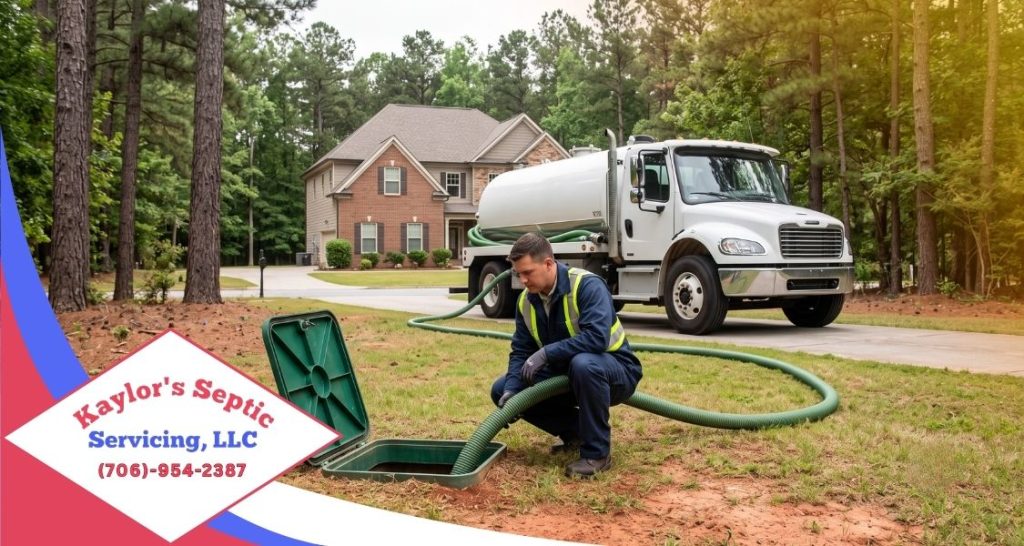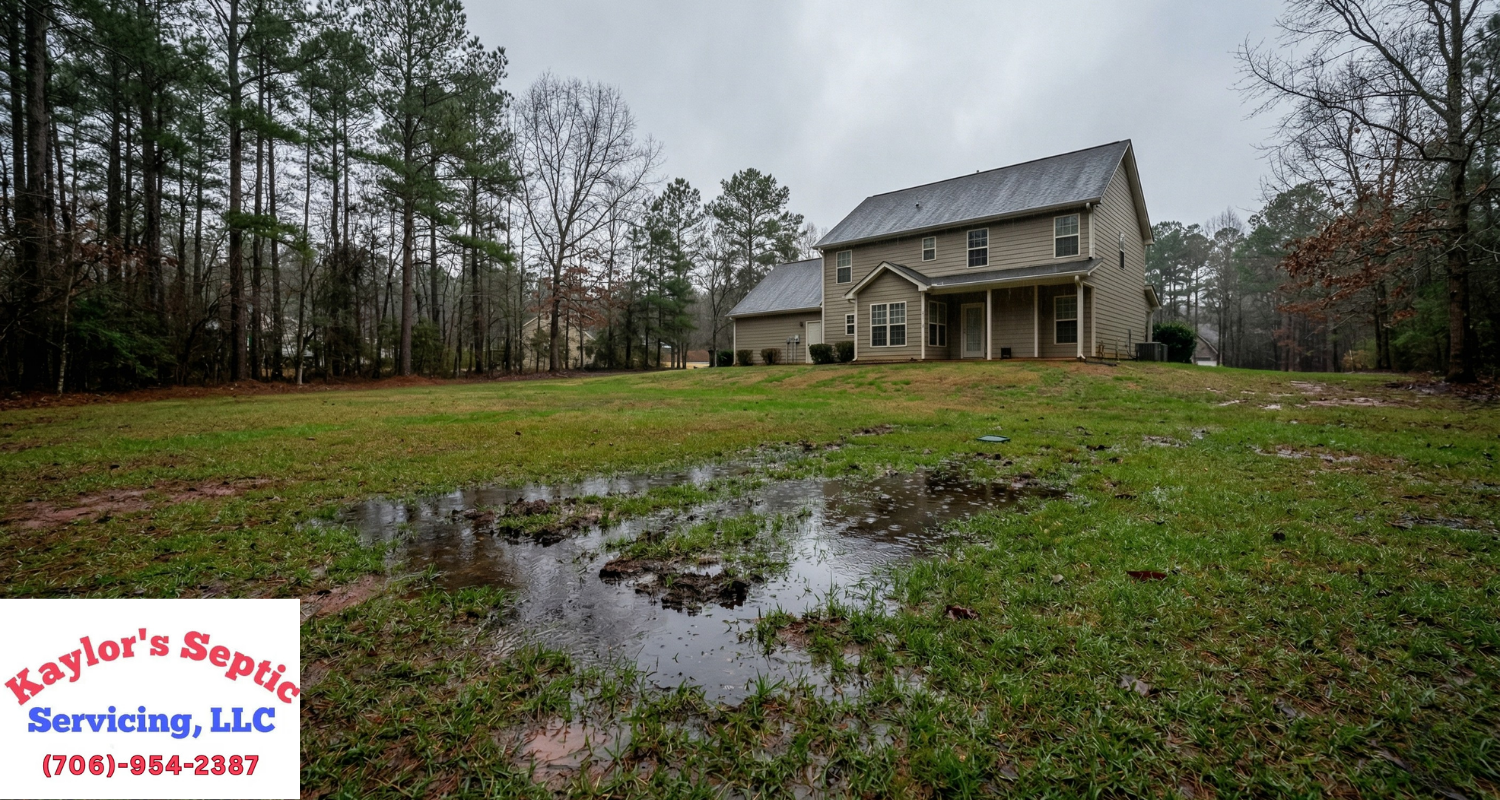
Heavy rain can expose septic problems fast, especially when the soil around your system is already saturated. If your property in North Georgia has been hit with repeated storms and your plumbing suddenly starts acting different, the issue may not be inside the house at all. It may be your drain field struggling to do its job.
That is why knowing the right septic drain field signs matters. A backed-up septic system rarely starts with a dramatic disaster. More often, it starts with slower drains, strange sounds, soggy patches in the yard, or a smell that shows up after rain and then seems to fade.
If you catch those signs early, you have a better shot at preventing a bigger repair. If you ignore them, a wet-weather warning can turn into a year-round septic problem.
Why Heavy Rain Can Make Septic Drain Field Signs Show Up Faster
These septic drain field signs often show up faster after heavy rain because saturated soil slows down how well the drain field can absorb wastewater.
Your septic system depends on soil absorption. After wastewater leaves the tank, it moves into the drain field, where the surrounding soil helps filter and disperse it. When the ground gets overloaded with stormwater, that process slows down.
The result is usually not subtle for long. Water may stop moving through the system as easily as it should. Wastewater can begin backing up in the line. The yard above the drain field may stay wet longer than the rest of the property. Odors can start showing up around the tank, the field line area, or even inside the house.
The EPA’s homeowner guidance puts drain field care alongside inspection, pumping, water efficiency, and waste disposal as one of the core parts of septic maintenance.
If your system is already overdue for care, a period of heavy rain can make that weakness show up faster.
EPA septic system care guidance is a good baseline, but local service matters when the warning signs are already showing.
Septic Drain Field Signs That Show Up Inside the House
These septic drain field signs inside the house usually show up before homeowners notice how serious the problem is outside.
1. Slow drains in more than one fixture. One slow sink can be a normal clog. A whole-house slowdown after a storm is different. If sinks, tubs, and toilets all seem sluggish at the same time, your septic system may be having trouble moving wastewater out to the drain field.
2. Gurgling toilets or bubbling drains. Air movement in the plumbing after rain is often one of the first signs that wastewater is not flowing normally. Homeowners sometimes wait too long because the toilet still flushes. The sound is the warning.
3. A septic smell inside the house. If you notice sewage odors near drains or in lower-use bathrooms after wet weather, do not brush it off as a one-day issue. Smells often show up before a full backup does.
4. Backup risk that gets worse when you use more water. If laundry day, long showers, or back-to-back dishwasher loads seem to make the problem worse, that is another clue that the system is under stress.
The EPA recommends spreading out water use because overloading the system can flood the drain field and increase malfunction risk.
If your household is already overdue for septic tank pumping, built-up solids can make a rain-related problem harder for the system to handle.
Septic Drain Field Signs You Can See in the Yard
These septic drain field signs in the yard are often easier to spot after a storm, especially when one part of the property stays wetter or smells worse than the rest.
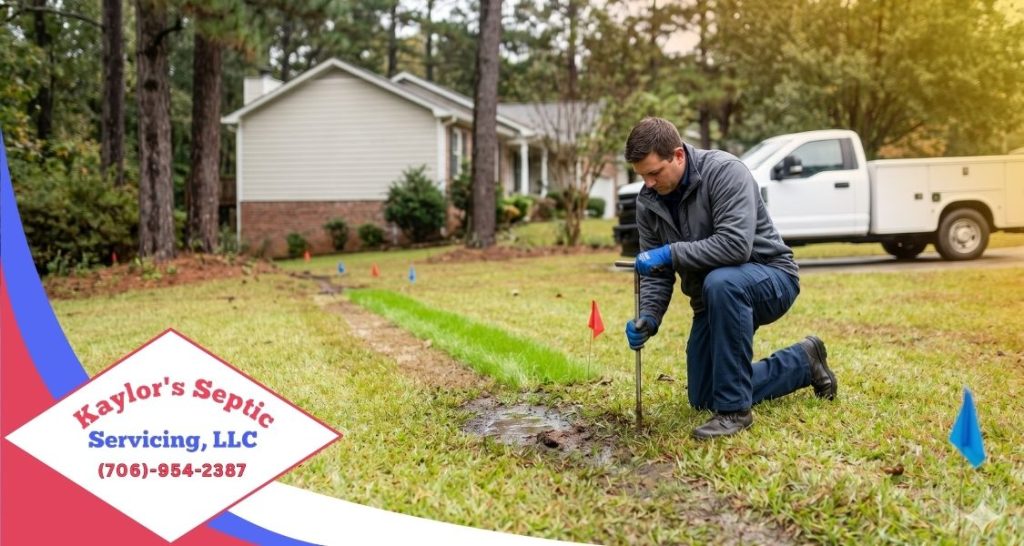
5. Standing water or soggy ground over the field line area. After a storm, some wet ground is normal. What is not normal is one part of the yard staying wet long after the rest has started drying out. A drain field that stays soggy may be struggling to absorb wastewater correctly.
6. Unusually green or fast-growing grass in one section. Homeowners sometimes mistake this for a good-looking patch of lawn. It can actually be a warning sign. If one strip of yard above the septic area looks thicker, greener, or wetter than the surrounding grass, wastewater may be rising too close to the surface.
7. Odors or damp spots near the tank lid, line, or field area. If the smell is outside and gets stronger after rainfall, the problem may be in the drain field, the service line, or another system component that needs inspection.
If the issue points to damage instead of normal overload, service line repair may be part of the fix.
What These Septic Drain Field Signs Usually Mean
What these septic drain field signs mean depends on whether the issue is temporary saturation, overdue maintenance, or damage that needs repair.
Not every symptom means the entire system has failed. Sometimes the issue is temporary saturation after a very wet stretch. Sometimes it is a sign of a system that was already overdue for maintenance. Sometimes it points to a line issue, a blocked component, or a drain field that needs closer evaluation.
The problem is that homeowners usually cannot tell which one they are dealing with from the surface alone. A wet patch and a bad smell may clear up after the ground dries out, or they may be the first sign of a bigger repair.
That is why a good septic article should not only tell you what to watch for. It should also tell you when to stop guessing.
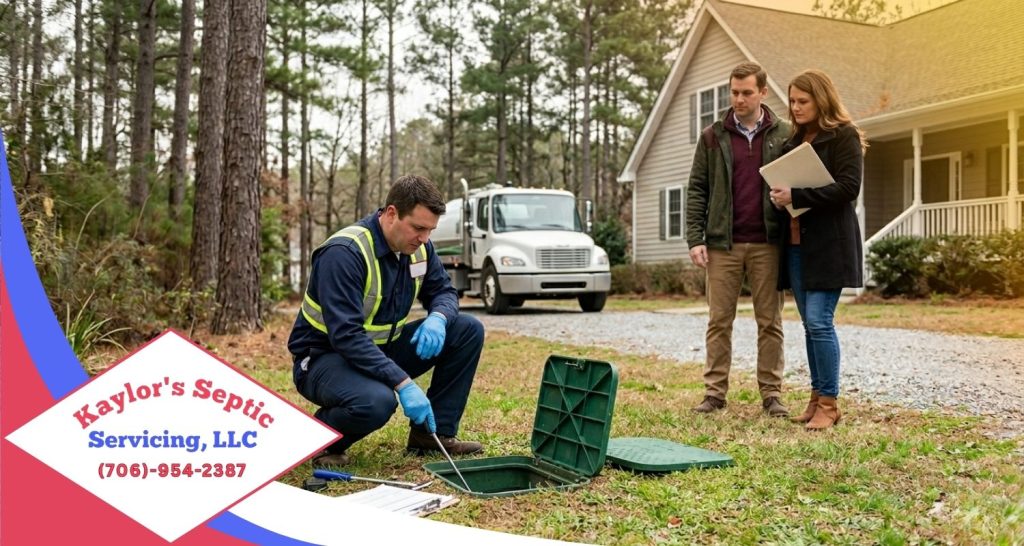
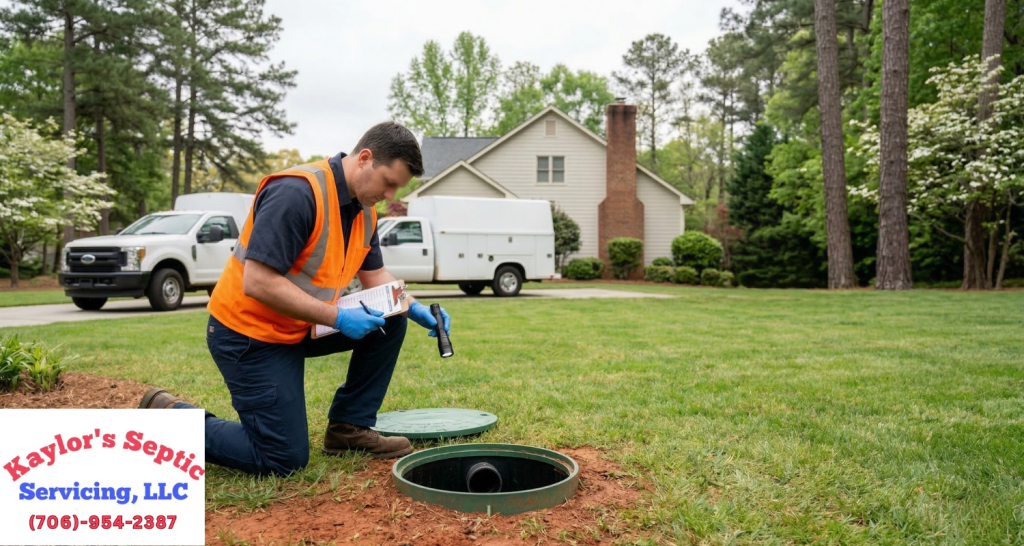
If the symptoms keep showing up, or if the system never seems to return to normal after the rain ends, schedule a professional inspection and maintenance service.
Kaylor’s site is already built around repair, upgrade, pumping, inspection, and maintenance work, so this kind of article should push naturally toward diagnosis instead of DIY overconfidence.
What To Do First When Septic Drain Field Signs Show Up
When septic drain field signs show up after heavy rain, the safest first move is to reduce strain on the system and watch how quickly conditions normalize.
Start by reducing water use for a short window. Spread out showers, laundry, dishwasher cycles, and anything else that adds a lot of water to the system. If the soil is overloaded, sending more wastewater into it too quickly can make the symptoms worse.
Next, stay off the drain field area. The EPA warns against driving or parking on a drain field because weight can damage drain lines, and it also advises against planting trees or shrubs too close because roots can clog the system.
Wet soil is already under stress, so compaction is the last thing you want to add.
Then pay attention to duration. If the drains normalize after the weather clears and the yard dries out evenly, that points more toward temporary stress. If the problem lingers, repeats, or starts getting worse, it is time to get a septic professional involved.
When Septic Drain Field Signs Mean It Is Time To Call Kaylor Septic
If septic drain field signs keep coming back after storms, it is time to stop guessing and get the system checked.
Call when the problem is affecting multiple fixtures, when the yard stays soggy around the drain field, when odors keep returning, or when rain seems to trigger the same pattern every time. Those are not good signs to monitor for another month.
Kaylor Septic serves homeowners and commercial properties across Bartow, Cherokee, Cobb, Floyd, Gordon, Paulding, and Pickens Counties. The company already offers pumping, inspection and maintenance, septic cleaning, riser installation, and repair-focused services, which makes this article a strong fit for a homeowner who has moved past curiosity and needs a real answer.
If you are seeing septic drain field signs after heavy rain, do not wait for a full backup to make the decision for you. Contact Kaylor Septic or call 706-954-2387 to schedule service before temporary septic drain field signs turn into a bigger septic repair.
Do Not Wait for a Full Septic Backup
If heavy rain keeps exposing slow drains, odors, or soggy ground around your drain field, get the system checked before a smaller warning becomes a bigger repair.