

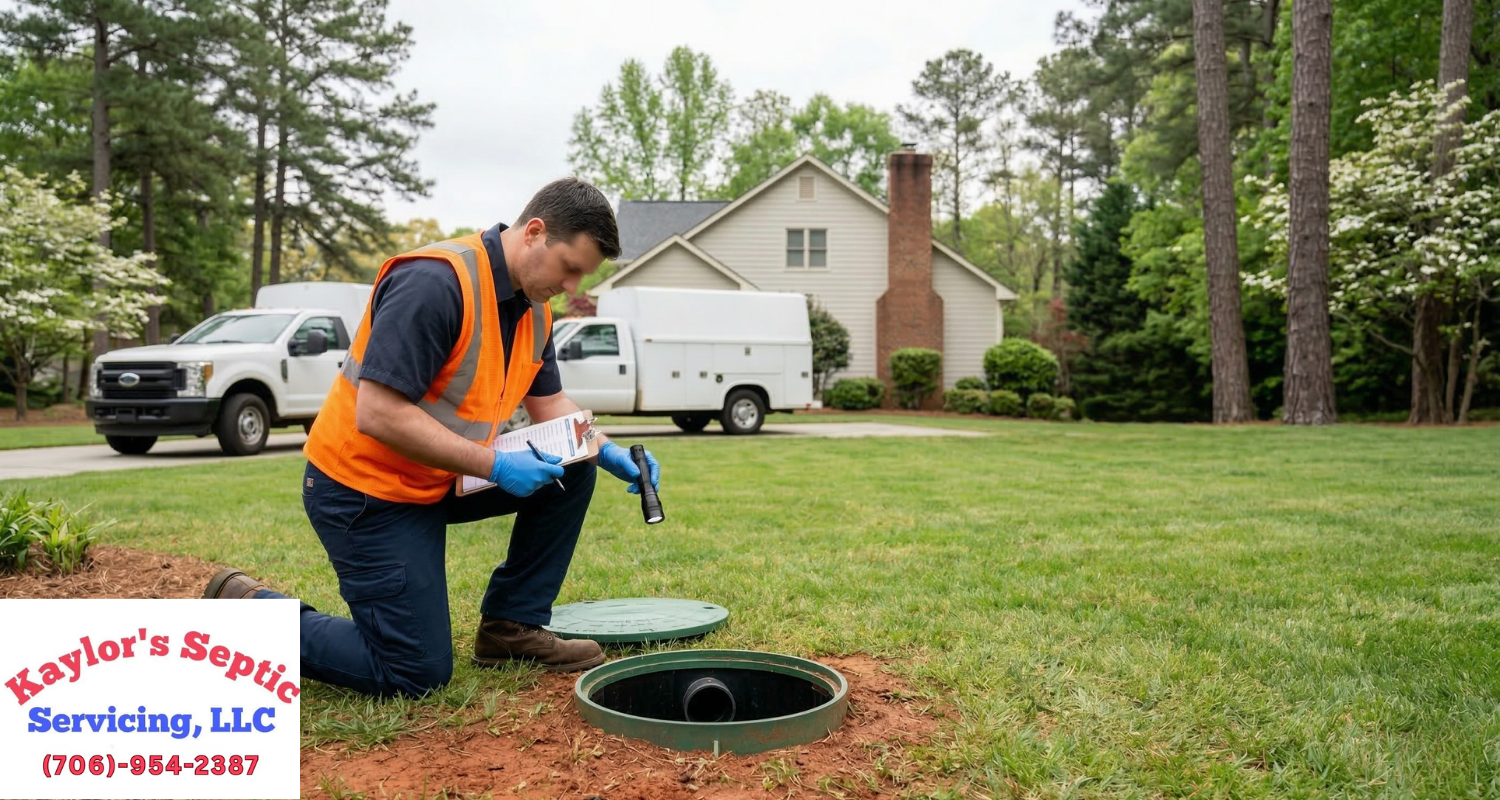
As winter fades and spring begins, March is one of the best times for Georgia homeowners to check on the health of their septic system.
Warmer temperatures, seasonal rain, and increased household activity can all put extra stress on a septic system. A little preventive maintenance now can help you avoid slow drains, foul odors, backups, and expensive repairs later.
At Kaylor’s Septic Servicing, LLC, we help homeowners and property owners across Bartow, Cherokee, Cobb, Floyd, Gordon, Paulding, and Pickens Counties keep their septic systems working the way they should. If you want to protect your property this spring, here are the top septic maintenance tips to keep in mind for March 2026.
Why March Is a Smart Time for Septic Maintenance in Georgia
Spring weather can be hard on septic systems.
March often brings heavier rain, wetter soil, and more outdoor activity around the property. When the ground becomes saturated, your drain field may not absorb and filter wastewater as efficiently as it should. That can increase the risk of odors, soggy spots, slow drains, and other early warning signs.
March is also the ideal time to get ahead of the busier spring and summer season. Scheduling maintenance now gives you a better chance of catching smaller issues before they turn into emergency repairs.
1. Schedule Septic Tank Pumping If You’re Due
One of the most important things you can do for your septic system is stay on a regular pumping schedule.
Over time, solids build up in the tank. If they are not removed, those solids can move into the drain field and create serious long-term problems. If you cannot remember the last time your tank was pumped, March is a good time to get back on track.
Routine septic tank pumping can help:
-
reduce the risk of backups into sinks, tubs, and toilets
-
cut down on foul odors around the property
-
protect the drain field from solids overflow
-
extend the life of the system
-
lower the chance of major repair costs later
The right pumping schedule depends on tank size, household size, and daily water use, but regular service is always cheaper than dealing with a failure.
2. Watch for Early Warning Signs Before Spring Gets Busier
Most septic problems do not start as full-blown emergencies. They start small.
As you move into spring, keep an eye out for signs like:
-
slow drains throughout the house
-
gurgling sounds from toilets or drains
-
sewage odors inside or outside
-
wet or soggy spots near the drain field
-
unusually green grass over the septic area
-
toilets that back up or drain poorly
These symptoms can point to a full tank, line damage, drain field trouble, or another septic issue that needs attention. The sooner you act, the better your odds of avoiding a larger repair.
3. Protect Your Drain Field During Spring Rain
Heavy spring rain can create extra pressure on your septic system, especially when the soil is already holding moisture.
To reduce stress on the system during wet weather:
-
keep roof runoff, sump discharge, and surface drainage away from the drain field
-
avoid driving, parking, or placing heavy equipment over the septic tank or drain field
-
postpone unusually heavy water use if you are already seeing drainage problems
-
check the yard for standing water or soft, soggy ground near the drain field
If your property tends to hold water after storms, this is the time to address it before the season gets wetter.
4. Be Careful About What Goes Down the Drain
A healthy septic system starts with better habits inside the home.
Your septic system is designed to handle wastewater, human waste, and toilet paper. It is not designed for many of the products homeowners flush or rinse away without thinking about it.
This spring, avoid putting the following into your system:
-
grease, fats, and cooking oil
-
“flushable” wipes
-
paper towels
-
feminine hygiene products
-
paints, solvents, and harsh chemicals
-
large amounts of bleach or antibacterial cleaners
The fewer clogs and chemical disruptions inside the tank, the better your system will perform outside.
5. Check Your Risers and Access Points
If your septic system does not already have a riser installed, routine service may be harder and more disruptive than it needs to be.
A septic riser brings the access point closer to the surface, making future inspections, pumping, and maintenance faster and easier. It can also reduce unnecessary digging during future service visits.
If your system is older, buried deep, or difficult to access, March is a smart time to ask whether riser installation would make future maintenance simpler.
6. Do Not Ignore Small Repairs
Minor septic issues rarely stay minor for long.
A worn component, a damaged service line, or a system that is overdue for maintenance can turn into a much more expensive repair if it is left alone. Small problems are usually easier, faster, and more affordable to fix before they escalate.
If you have noticed changes in drainage, odors, or the condition of the yard above your septic system, now is the right time to get it checked.
7. Get Ready for Spring and Summer Water Use
As the weather warms up, many households start using more water.
Spring guests, home improvement projects, outdoor cleanup, extra laundry, and more time spent at home can all add demand to your septic system. A system that was already close to full in winter may struggle more once usage increases.
That is why March is such a practical month for preventive service. A pumping appointment, inspection, or repair now can help you move into spring and summer with more confidence.
Why Homeowners in Northwest Georgia Choose Kaylor’s Septic
When septic problems happen, homeowners want more than a truck and a hose. They want a company that shows up on time, explains the issue clearly, and does the work the right way.
Kaylor’s Septic Servicing, LLC is a family-owned business built on honest service, dependable communication, and real septic experience. We help residential and commercial customers across northwest Georgia with septic tank pumping, cleaning, inspections, maintenance, service line repair, riser installation, and other septic system needs.
Whether you need routine maintenance or help with a warning sign that just started, our goal is simple: keep your system working properly and help you avoid bigger problems later.
Frequently Asked Questions
How do I know if my septic tank may be due for pumping?
If you cannot remember the last pumping date, or if you are noticing slow drains, odors, gurgling sounds, or soggy ground near the drain field, it is a good idea to schedule a septic inspection.
Can spring rain affect a septic system?
Yes. Saturated soil can make it harder for a drain field to absorb wastewater properly, especially on properties with drainage challenges.
What should never go into a septic system?
Avoid grease, oils, wipes, paper towels, feminine hygiene products, paints, solvents, and excessive harsh chemicals.
Schedule Your Spring Septic Service Today
If your septic tank is due for pumping, your system is showing warning signs, or you simply want peace of mind going into spring, now is the time to schedule service.
Kaylor’s Septic Servicing, LLC provides honest, reliable septic service for homeowners and businesses across northwest Georgia. Contact us today to request a free quote and get your septic system ready for the season ahead.
