Septic line repair signs usually show up before a full septic backup happens. The problem is that many homeowners mistake those early warnings for a normal plumbing clog, a bad smell that will pass, or a wet spot in the yard that looks harmless after rain.
That delay can get expensive. If the service line between the house and the septic tank is clogged, cracked, shifted, blocked by roots, or holding wastewater where it should not, the system can stop moving waste the way it was designed to.
For homeowners in Bartow, Cherokee, Cobb, Floyd, Gordon, Paulding, Pickens, and nearby North Georgia communities, knowing the right septic line repair signs helps you act before a small line issue turns into a larger septic repair.
Why Septic Line Repair Signs Are Easy to Miss
Septic line repair signs can be easy to miss because the early symptoms often look like ordinary plumbing trouble. One toilet gurgles. One drain slows down. One area of the yard stays damp longer than expected.
The trouble is that the septic service line is not just another pipe. It is the path wastewater takes from the home toward the septic tank and, from there, the rest of the system.
If that line is damaged or blocked, the symptoms may start inside the home, show up in the yard, or appear only when the household uses more water than usual. That is why a small issue can be hard to place without an inspection.
Kaylor Septic’s service line repair page points to the same warning pattern homeowners often notice first: slow drainage, backups, odors, gurgling sounds, wet spots, and unusually green grass.
Septic Line Repair Signs Inside the House
The first septic line repair signs often appear indoors because the home is where wastewater enters the system. A line issue can slow the path from the house to the tank, which changes how drains, toilets, and fixtures behave.
1. Multiple drains slow down at the same time
One slow sink may be a simple fixture clog. Multiple slow drains across the home are different.
If a shower, bathroom sink, kitchen drain, and toilet all start draining slowly around the same time, the issue may be farther down the line. That does not automatically prove the service line is damaged, but it does mean the problem should not be treated like one isolated drain.
This is one of the cleaner septic line repair signs because it points away from a single fixture and toward the system path that carries wastewater out of the house.
2. Toilets gurgle after showers, laundry, or flushing
Gurgling is easy to ignore because the toilet may still flush. But gurgling can mean air is moving through the plumbing in a way it should not.
If that sound happens after laundry, long showers, or several flushes close together, the line may be struggling under higher water flow. Homeowners often notice this before a backup happens.
The safest move is to watch the pattern. A one-time noise may not mean much. Repeated gurgling with slow drains or odors is a stronger signal that the system needs attention.
3. Sewage odors come from drains or lower rooms
Odor is one of the septic line repair signs people tend to explain away too quickly. They may blame an unused bathroom, a dry trap, or a bad day for the system.
If the smell keeps returning, gets worse after water use, or shows up near more than one drain, it is worth checking. Wastewater may not be moving freely through the service line.
Odors are especially worth taking seriously when they come with slow drainage, bubbling sounds, or damp spots outside. The combination matters more than any one symptom by itself.
4. Backups happen during normal water use
A backup is the warning most homeowners finally take seriously. By that point, the system has usually been struggling for a while.
If wastewater backs up into tubs, showers, or floor-level drains when the washing machine runs or a toilet flushes, the line may be blocked or the tank may be too full. Either way, the home needs service before more water is sent into the system.
Kaylor’s inspection and maintenance service is a natural next step when symptoms are spread across the system and the cause is not obvious from the surface.
Septic Line Repair Signs Outside the Home
Some septic line repair signs show up outside because wastewater may be escaping, slowing down, or pooling near parts of the system that should stay contained.
Outdoor symptoms can be harder to read after rain. That is why the pattern matters. Look for spots that stay wet longer than the rest of the yard, smell worse than nearby areas, or keep returning in the same location.
5. Wet spots appear between the house and septic tank
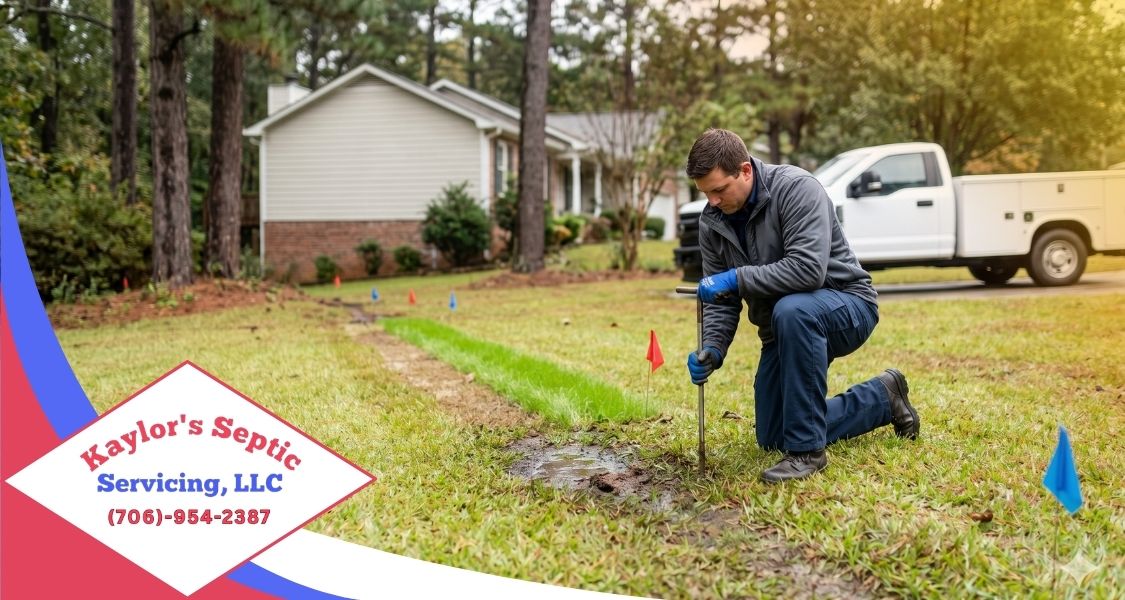
A damp area over the service line route can point to a line issue, especially if the rest of the yard is drying normally. This does not always mean a line is broken, but it should raise attention.
Wastewater should not be surfacing in the yard. If one area keeps getting soft, soggy, or smelly, the system may need inspection before the problem spreads.
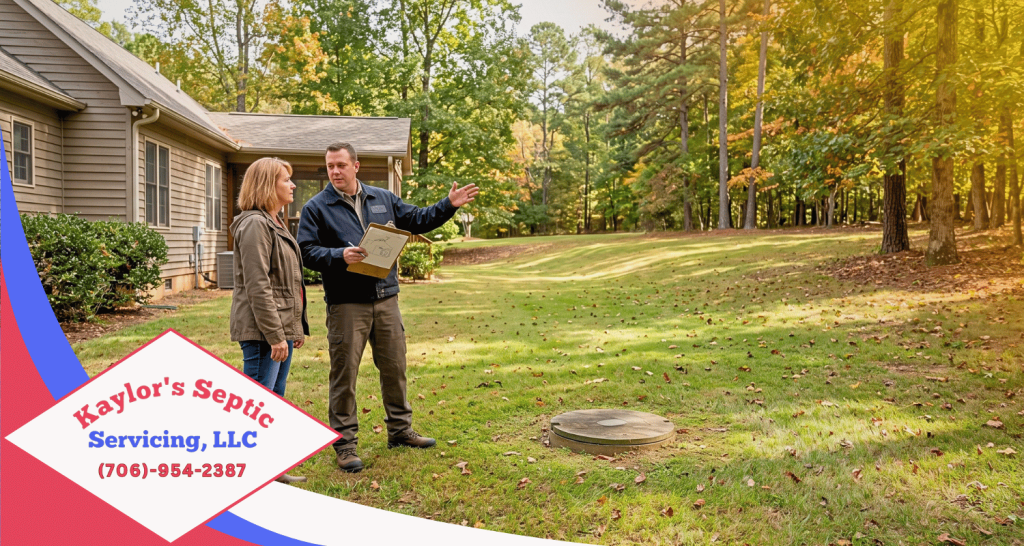
This is one reason service records and system layout matter. If you do not know where the tank or line runs, a septic professional can help locate the likely path and check the right area.
6. Grass looks unusually green in one strip
Thicker, greener grass can look like a good thing until you realize it may be following the line path. If a narrow strip of lawn grows faster or looks much greener than the surrounding area, wastewater may be feeding that section.
That is one of the outdoor septic line repair signs that can be easy to miss because it does not look like damage at first.
The warning gets stronger if the green area comes with damp soil, odors, or slow drains inside the house.
7. The yard smells bad near the tank or line path
A bad smell outside can point to several septic issues. The tank could need pumping. The service line could be leaking or blocked. The drain field could be under stress.
The key is not to guess too long. A smell that shows up once after heavy rain may fade. A smell that keeps returning near the same area deserves a closer look.
If the tank is overdue for service, septic tank pumping may be part of the answer. If the issue is tied to a damaged line, pumping alone may not solve it.
Septic Line Repair Signs After Heavy Water Use
Some septic line repair signs show up only when the system is under heavier demand. That is why a problem may seem random at first.
A quiet weekday with light water use may look normal. Laundry day, guests staying over, long showers, or back-to-back dishwasher loads may expose the weak spot.
EPA septic care guidance recommends using water efficiently because too much water entering the system can overload it and affect performance. EPA septic system care guidance is a useful baseline for homeowners trying to reduce strain while they schedule service.
8. Problems get worse after laundry or long showers
If toilets gurgle, drains slow down, or odors appear after laundry day, the system may be struggling to move wastewater fast enough.
This may be a tank issue, a service line issue, or a bigger system issue. The pattern still matters because it shows that normal household use is enough to expose a restriction.
Reducing water use may help in the short term, but it should not be treated as the only fix if the symptoms keep coming back.
9. The problem clears up, then returns again
A line problem does not always fail all at once. It may partially clear, slow down again, and then return when water use increases.
This stop-and-start pattern is one of the more frustrating septic line repair signs because it gives homeowners false confidence. The system seems better until the next busy day, storm, or heavy water cycle.
If the same problem repeats, the system is telling you something. The question is whether you catch it while the repair is still manageable.
What Causes Septic Service Line Problems?
A service line problem can come from several causes. Some are tied to age. Some are tied to soil movement, roots, clogs, poor installation, or outside pressure on the ground above the line.
North Georgia properties can also deal with tree cover, sloped yards, heavy rain, clay-heavy soil, and older systems that have had years of patchwork. Those conditions can make diagnosis harder from the surface alone.
Common causes include settled or shifted pipe sections, cracks, root intrusion, grease buildup, solid waste buildup, crushed line sections, or damage from vehicles and heavy equipment crossing sensitive areas.
Georgia DPH provides onsite sewage resources for homeowners and points people toward county environmental health offices for local questions, records, services, and inspections. The Georgia DPH onsite sewage resources are worth checking when a system issue may involve records, permits, or local requirements.
Why Pumping Alone May Not Fix Septic Line Repair Signs
Pumping is important, but it does not fix every septic problem. That distinction matters when homeowners see septic line repair signs and assume the tank just needs to be emptied.
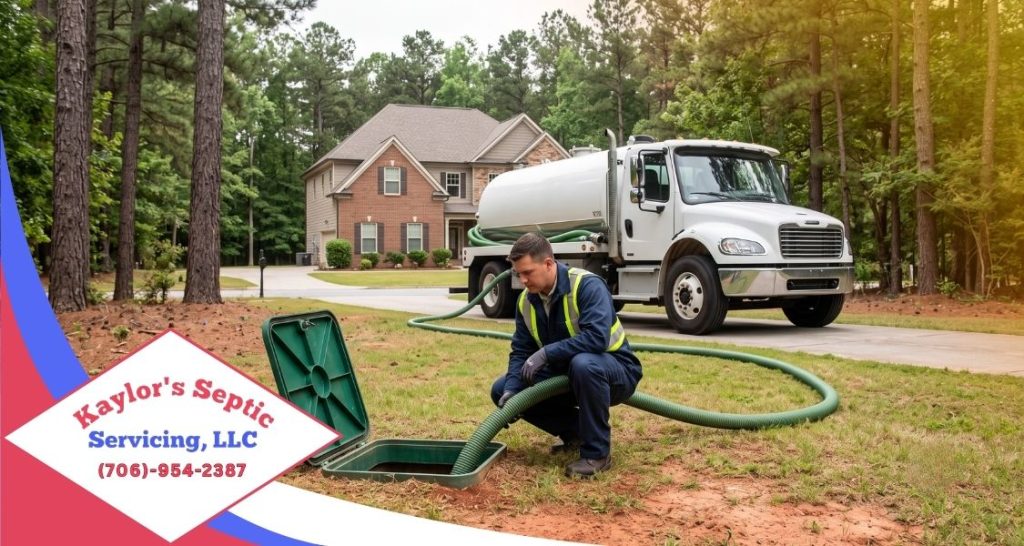
If the tank is full or overdue, pumping may help. Kaylor’s septic tank pumping service is built around removing accumulated solids and checking the tank during the process.
But if the line between the house and tank is cracked, blocked, or holding wastewater because of damage, the symptoms can return after pumping. That is why inspection matters before assuming one service will solve everything.
Septic cleaning can also be part of the maintenance picture. Kaylor’s septic cleaning service focuses on removing sludge and debris that can reduce tank capacity and add stress to the system.
The right answer depends on where the restriction or damage is. A tank problem, line problem, and drain field problem can look similar from inside the house.
What Homeowners Should Do When Septic Line Repair Signs Appear
When septic line repair signs show up, the first move is to reduce strain on the system. Stop running back-to-back laundry loads, avoid long showers, and do not keep flushing or draining water to “test” the problem.
Next, write down what is happening. Note which drains are slow, when the smell appears, where the yard is wet, and what was happening before the symptoms started.
Do not drive over the suspected service line or septic area. Heavy weight can make existing line problems worse, especially when soil is wet.
If the tank lid is difficult to access, this may also be a good time to ask about riser installation. Easier access makes future pumping, inspections, and emergency visits less frustrating.
Most of all, do not wait for sewage to enter the home. A service call before the backup is usually less stressful than an emergency call after the floor is already affected.
How Kaylor Septic Checks the Problem
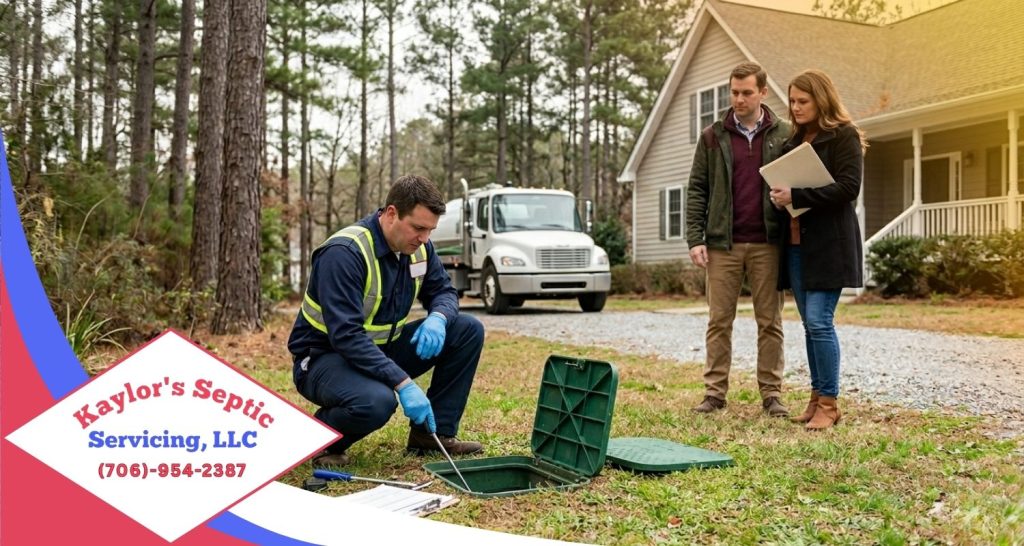
A good service visit should narrow the problem instead of guessing. That means looking at the symptoms, the system layout, the tank condition, the line path, and the point where wastewater is slowing down.
Kaylor’s site explains that service line issues can involve clogs, breaks, freezing, backups, odors, gurgling sounds, wet spots, and unusually green grass. The company’s repair process includes inspection, diagnosis, problem resolution, reduced disruption, and follow-up testing.
That matters because septic line repair signs are not always clean-cut. A homeowner may see a wet patch and smell odor, but that does not prove which part of the system is failing.
A local septic technician can separate a line issue from a tank issue, a maintenance issue, or a drain field issue. That saves time and helps homeowners avoid paying for the wrong fix first.
When Septic Line Repair Signs Mean You Should Call
Call when symptoms affect more than one fixture, when odors keep coming back, when the same yard area stays wet, or when problems get worse after normal water use.
Call sooner if wastewater backs up into the home. At that point, the problem has moved beyond a warning sign.
Kaylor Septic works with residential and commercial customers across Bartow, Cherokee, Cobb, Floyd, Gordon, Paulding, and Pickens Counties. The company’s services include pumping, septic cleaning, service line repair, riser installation, and inspection and maintenance.
If you are seeing septic line repair signs, the safer move is to get the system checked before a slow drain turns into a full backup. Contact Kaylor Septic or call 706-954-2387 to request service and get a clearer answer on what is happening underground.
Catch Septic Line Trouble Before It Backs Up
Slow drains, gurgling toilets, sewer odors, and wet yard spots are easier to deal with before wastewater reaches the house. Get the line checked and find the real cause before the repair gets bigger.