August septic maintenance checklist work should happen before fall rain, cooler weather, and heavier household routines start putting new stress on your septic system. By late summer, many North Georgia homes have already gone through months of heat, guests, outdoor projects, extra laundry, and higher water use.
That kind of use can quietly strain the tank, drain field, service lines, and the soil around the system. The warning signs may stay small at first: slow drains, soggy ground, stronger odors, gurgling toilets, or a tank that has not been pumped in years.
For homeowners in Canton, Cherokee County, Bartow, Cobb, Floyd, Gordon, Paulding, Pickens, and nearby North Georgia areas, this August septic maintenance checklist gives you a practical way to catch problems before fall turns them into expensive repairs.
Why an August Septic Maintenance Checklist Matters Before Fall
An August septic maintenance checklist matters because late summer is a useful checkpoint. The ground is often easier to inspect than it may be after steady fall rain, and the system has already handled heavy summer use.
Many homeowners wait until something smells bad, drains slowly, or backs up before calling a septic professional. That usually means the system has already been under stress for a while.
The EPA’s septic care guidance breaks maintenance into four simple areas: inspect and pump, use water efficiently, dispose of waste properly, and maintain the drainfield. Those same four areas are the backbone of a smart EPA septic system care guidance plan.
A good August septic maintenance checklist is not about guessing. It is about looking at the parts of the system most likely to show stress before fall weather and busier household routines arrive.
That is also why local service matters. Kaylor Septic works across North Georgia and offers inspection and maintenance, septic tank pumping, septic cleaning, service line repair, and riser installation for homeowners who need more than a surface-level check.
Use This August Septic Maintenance Checklist to Cut Water Stress
The first part of any August septic maintenance checklist is water use. Summer can bring guests, kids at home, extra showers, more laundry, and heavier outdoor cleanup. All of that water eventually reaches the septic system.
Too much water entering the system at once can reduce the tank’s ability to separate solids and liquids. It can also push too much wastewater toward the drain field before the soil has time to absorb and treat it.
Start by spreading laundry across the week instead of doing several loads in one day. Run full dishwasher loads instead of half-loads. Fix leaking toilets and faucets. Watch for running toilets, because even one leak can send far more water into the system than homeowners realize.
The EPA notes that efficient water use improves septic system operation and reduces malfunction risk. It also warns that doing all household laundry in one day can harm the system because the tank may not have enough time to treat waste before more water arrives.
A practical August septic maintenance checklist should include one simple question: Is our household sending more water into the tank than it needs to?
Inspect the Drain Field Before Fall Rain Arrives
The drain field is not separate from septic maintenance. It is where treated wastewater leaves the tank and moves into the soil. If the drain field struggles, the whole system can struggle.
Walk the yard and look for standing water, soft spots, soggy ground, sewage odors, or unusually green grass above the septic area. These warning signs matter more when they keep showing up in the same place.

EPA guidance also warns homeowners not to park or drive on the drain field and to keep roof drains, sump pumps, and other rainwater drainage away from the area. Extra water can slow or stop the wastewater treatment process in the soil.
If your August septic maintenance checklist turns up wet ground, odors, or grass that looks too green in one area, do not keep using water to test the problem. Schedule an inspection and let a septic professional check what is happening below the surface.
Schedule a Septic Tank Inspection Before the Busy Season
A septic inspection can catch small issues before they become major repairs. That makes inspection one of the most useful parts of an August septic maintenance checklist.
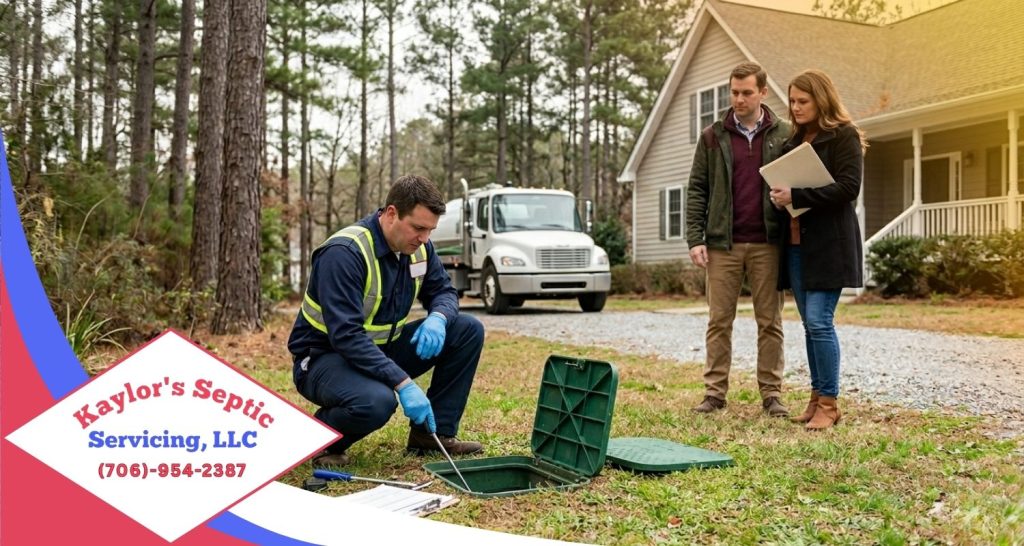
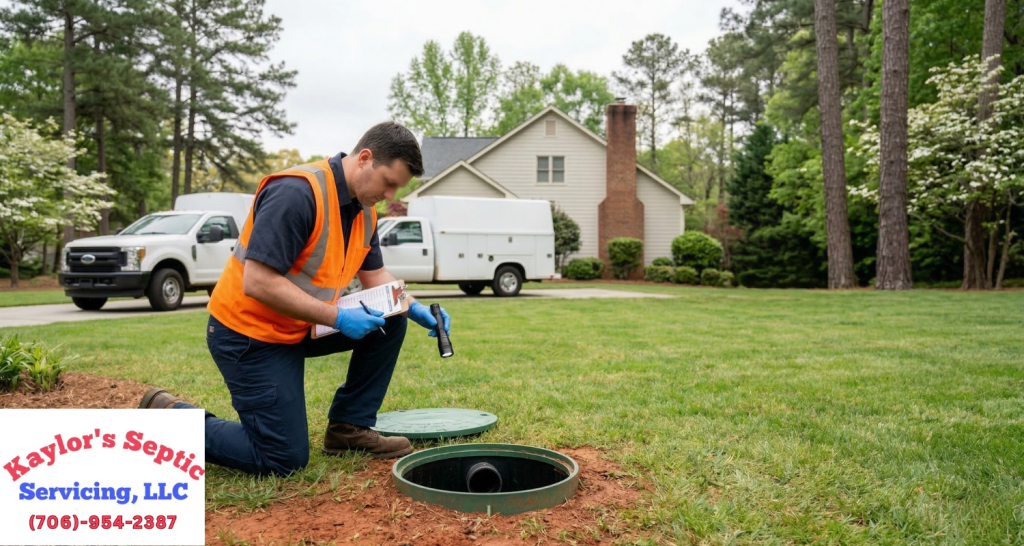
During an inspection, a septic professional can check the tank condition, access point, sludge and scum levels, inlet and outlet areas, visible leaks, drain field warning signs, and whether the tank may need pumping.
EPA guidance says the average household septic system should be inspected at least every three years by a septic professional. It also says household septic tanks are typically pumped every three to five years, depending on use, tank size, and household conditions.
That does not mean every home follows the same schedule. A larger household, heavier water use, garbage disposal use, frequent guests, or unclear service records can change the timeline.
Kaylor’s inspection and maintenance service is the right internal path for homeowners who do not know the system’s condition or have started noticing warning signs.
If you have not had the system checked in years, your August septic maintenance checklist should not stop at a yard walkaround. Put a real inspection on the calendar.
Know When Septic Tank Pumping Is Due
Pumping is one of the easiest septic services to delay because the tank is underground and out of sight. That delay can cost more later.
A full or overdue tank can create slow drains, gurgling toilets, sewage odors, wet areas near the tank, and backups. Those signs do not always prove the tank is the only problem, but they do mean the system needs attention.
Your August septic maintenance checklist should include one direct question: When was the tank last pumped?
If the answer is unclear, or if the previous owner never gave you records, schedule service. Guessing is not a maintenance plan.
The EPA says pumping frequency depends on household size, wastewater volume, solids in the wastewater, and septic tank size. Their septic system FAQ also points homeowners toward local records and system information when they need to understand what is on the property.
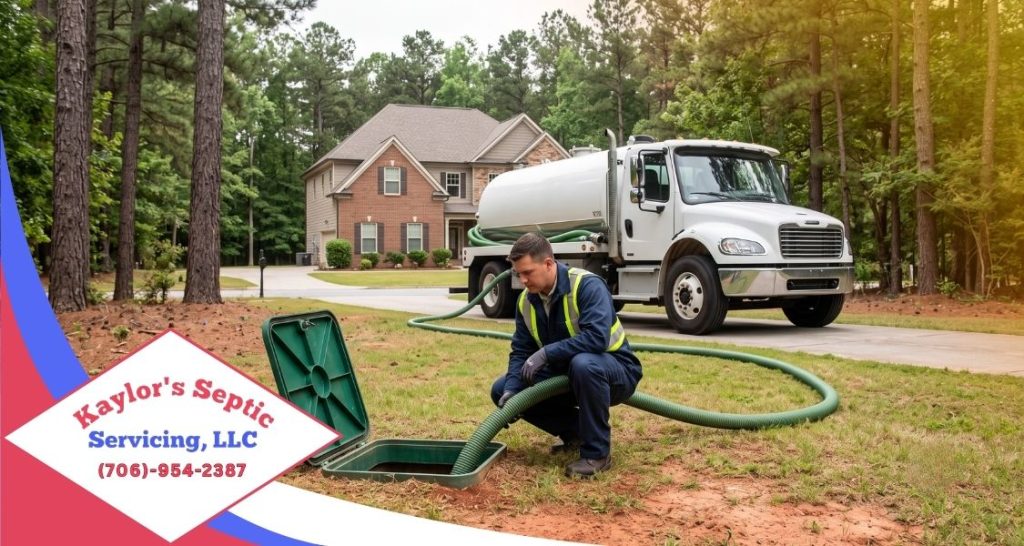
Kaylor’s septic tank pumping service helps remove accumulated solids so the tank has room to work. During service, homeowners can also ask what the technician saw and when the next pump-out should likely happen.
Add Septic Cleaning to the August Septic Maintenance Checklist When the Tank Has Been Neglected
An August septic maintenance checklist should also separate normal pumping from deeper cleaning needs. Homeowners often use those words like they mean the same thing, but neglected tanks may need a closer look.
Kaylor’s septic cleaning service focuses on removing accumulated sludge and debris from the tank to reduce clogs, backups, and system damage risk.
If a tank has not been serviced in years, cleaning may help restore working space inside the tank and give the technician a better view of the system’s condition.
That does not mean cleaning fixes every septic problem. It will not repair a cracked service line or restore a failing drain field. But it can be part of the right maintenance plan when buildup is the issue.
If your August septic maintenance checklist reveals unknown service history, bad odors, slow drains, or a tank that has not been opened in years, ask whether pumping alone is enough or whether septic cleaning makes sense.
Keep Heavy Equipment Off the Septic System
Late summer often brings yard work, landscaping projects, driveway work, tree cleanup, and outdoor storage. That is exactly why this reminder belongs on an August septic maintenance checklist.
Do not drive or park RVs, boats, trailers, construction equipment, or heavy vehicles over the septic tank, service lines, or drain field. Heavy weight can compact soil, damage buried components, and reduce how well the drain field handles wastewater.
EPA guidance says most drain fields are not designed for vehicles or heavy equipment. It also warns that vehicle weight can compact soil and damage pipes.
If you are not sure where the tank or drain field sits, stop before moving heavy equipment across the yard. A septic professional can help identify the system area so you do not accidentally create a repair problem.
This part of the August septic maintenance checklist is simple: Keep weight off the system, especially before fall rain softens the ground.
Protect the Drain Field From Roots and Extra Water
Grass over the drain field is usually fine. Deep-rooted trees and shrubs planted too close to septic lines are a different story.
Roots naturally seek moisture. If they grow into pipes or drain field areas, they can create blockages, damage lines, and make the system harder to service.
Your August septic maintenance checklist should include a quick look at trees, shrubs, drainage paths, gutters, downspouts, and sump pump discharge. Water from the roof or yard should not be directed toward the drain field.
If water keeps collecting near the septic area, the system may have a harder time treating wastewater once fall rain arrives.
Kaylor also offers service line repair for issues tied to slow drainage, backups, odors, bubbling sounds, wet spots, and unusually green grass. If your checklist reveals those symptoms, the problem may be more than normal maintenance.
Only Flush What Belongs in a Septic System
Septic systems are not built to handle everything that fits down a toilet or drain. This is one of the most important habits on an August septic maintenance checklist.
Only flush human waste and toilet paper. Avoid wipes, paper towels, feminine hygiene products, grease, coffee grounds, cat litter, harsh chemicals, and anything marketed as “flushable” but likely to cause trouble in the system.
EPA guidance is direct on this point. Toilets are not trash cans, and what goes down drains affects how well the septic system works.
The same applies at the sink. Avoid pouring grease, oils, large amounts of cleaning chemicals, or solids down the drain. Those items can add stress to the tank, interfere with bacteria, and increase the chance of clogs or drain field problems.
A useful August septic maintenance checklist should not only focus on the tank. It should also reset the household habits that affect the tank every day.
Use an August Septic Maintenance Checklist to Check Access Points
An August septic maintenance checklist should include tank access. If the tank lid is buried, hard to find, or difficult to reach, routine service becomes easier to delay.
That delay matters. When access is difficult, homeowners often postpone pumping or inspection until something smells, backs up, or floods.
Kaylor offers riser installation for homeowners who want easier access for future inspection, pumping, and maintenance visits.
A riser does not replace maintenance. It makes maintenance easier to schedule and easier to complete.
If your tank is difficult to access, add riser discussion to your August septic maintenance checklist. It may save time and frustration during future service calls.
August Septic Maintenance Checklist Warning Signs to Catch Early
An August septic maintenance checklist should end with warning signs. These are the symptoms that should move a homeowner from “watch it” to “call someone.”
Call a septic professional if you notice sewage smells, slow drains throughout the house, water pooling in the yard, toilets backing up, gurgling plumbing, wet areas near the tank, unusually green grass, or symptoms that return after heavy water use.
One sign by itself may not identify the exact cause. Several signs together matter more.
For example, slow drains plus gurgling toilets may point to a full tank, a line issue, or a drain field problem. Wet ground plus odor near the septic area may point to wastewater not moving correctly through the system.
The purpose of an August septic maintenance checklist is not to turn homeowners into septic technicians. It is to help them catch the moment when guessing is no longer the right move.
Local August Septic Maintenance Checklist for North Georgia Properties
A local August septic maintenance checklist should account for North Georgia conditions. Homes in Cherokee County, Canton, Bartow, Cobb, Floyd, Gordon, Paulding, and Pickens may deal with sloped yards, clay-heavy soil, tree cover, summer storms, older systems, and unclear service records.
That local context matters because septic systems do not fail in a vacuum. Soil, drainage, household size, water habits, system age, and maintenance history all affect how the system behaves.
Kaylor’s areas we service page lists Cherokee County, Canton, Bartow County, Cobb County, Floyd County, Gordon County, Paulding County, and Pickens County among the company’s service areas.
Georgia DPH provides onsite sewage resources and directs people with record requests, services, inspections, and local questions to their county environmental health office. The Georgia DPH onsite sewage resources page is useful when homeowners need county-level information.
For homeowners, the practical move is still the same: Use the August septic maintenance checklist to spot possible issues, then call a septic professional when something looks off.
When August Septic Maintenance Turns Into a Service Call
Some checklist items are household habits. Others need a technician.
You can spread out laundry, stop flushing wipes, move heavy vehicles away from the drain field, and redirect extra water away from the septic area. Those steps help.
But you should not guess your way through sewage odors, standing water, recurring backups, unclear pumping history, or drain field symptoms.
If the August septic maintenance checklist shows signs of trouble, schedule a service visit before fall rain and colder weather narrow your options.
Kaylor Septic can inspect the system, pump the tank, clean the tank when needed, check service-line symptoms, discuss riser access, and recommend the next step based on what they find.
August Septic Maintenance Checklist FAQ
What should an August septic maintenance checklist include?
An August septic maintenance checklist should include water-use habits, drain field inspection, tank inspection, pumping history, warning signs, heavy equipment risks, root risks, access points, and what the household flushes or pours down drains.
Is August a good time for septic maintenance in Georgia?
Yes. August is a smart time for septic maintenance in Georgia because many systems have already handled heavy summer use, and homeowners still have time to address problems before fall rain and cooler weather arrive.
How often should a septic tank be pumped?
EPA guidance says many household septic tanks are typically pumped every three to five years, but timing depends on household size, wastewater use, solids volume, tank size, and system condition.
What are signs my septic system needs service?
Slow drains, gurgling toilets, sewage odors, wet yard areas, unusually green grass, frequent backups, and unclear pumping records are all reasons to schedule a septic inspection or service call.
Can Kaylor Septic inspect and pump my system before fall?
Yes. Kaylor Septic offers inspection and maintenance, septic tank pumping, septic cleaning, service line repair, and riser installation for homeowners and businesses across North Georgia service areas.
Schedule Your August Septic Maintenance With Kaylor
Preventive septic care is usually easier to handle than emergency repairs. A small warning sign in August can become a bigger problem if it sits through fall rain, holiday guests, colder weather, and heavier indoor water use.
If your tank has not been pumped in years, the yard has wet spots, drains are slow, odors keep returning, or you are simply unsure about the system’s condition, use this August septic maintenance checklist as the reason to schedule service now.
For septic inspection, pumping, cleaning, service-line concerns, riser access, or general maintenance, contact Kaylor Septic or call 706-954-2387 to request service before fall puts more pressure on the system.
Get the Septic System Checked Before Fall
If your August checklist shows slow drains, odors, soggy ground, unclear pumping history, or drain field warning signs, get the system checked before the season changes.