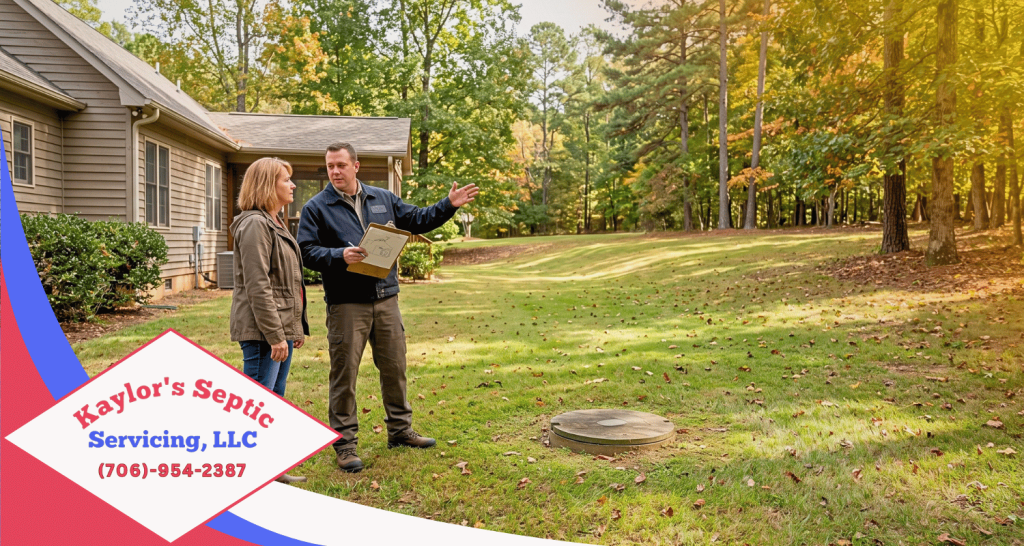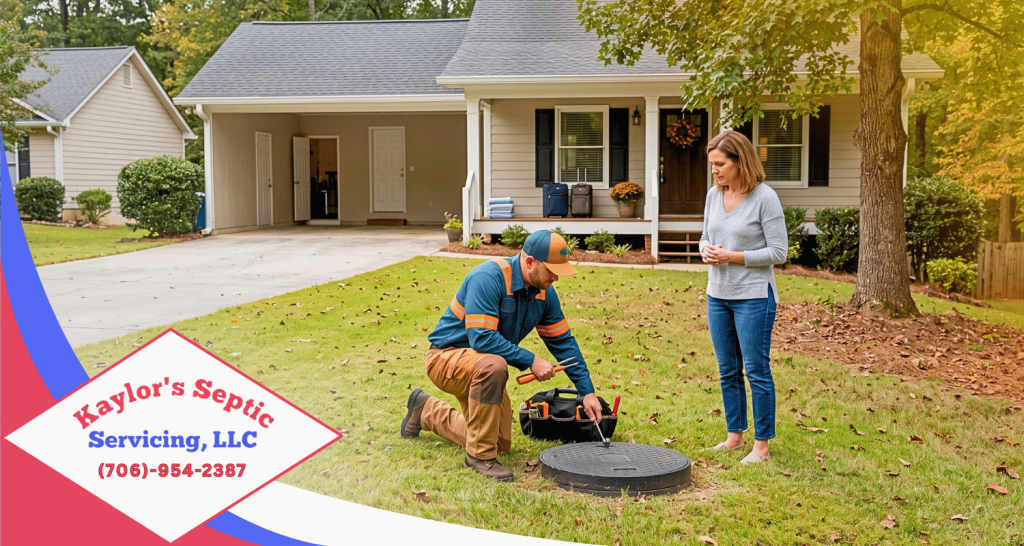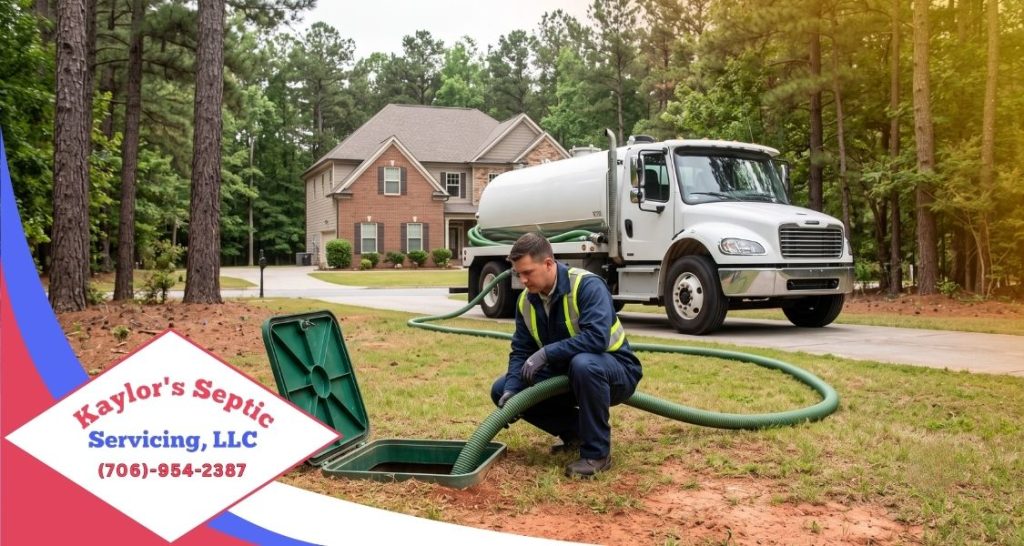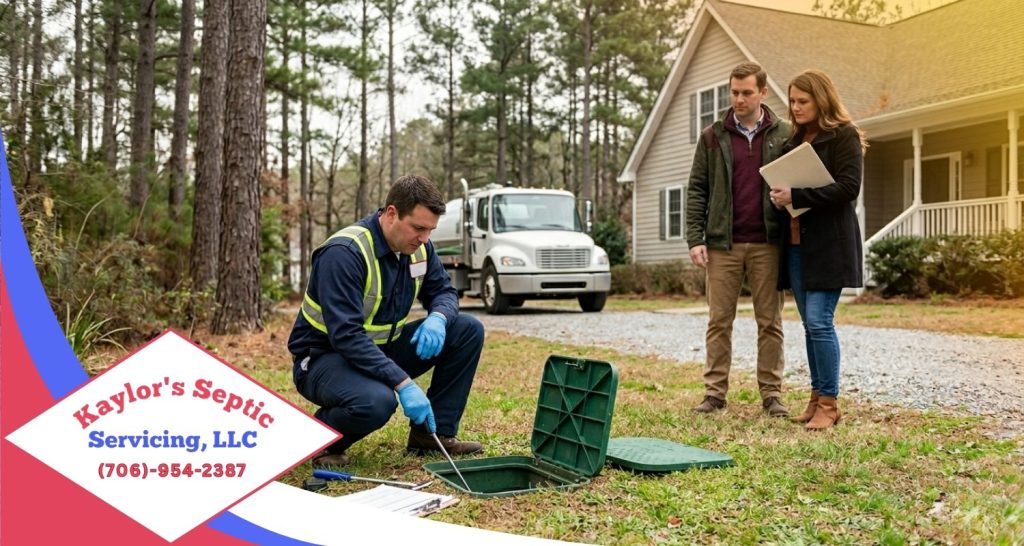
Thanksgiving can change how a septic system is used in a single day. The kitchen runs longer, the dishwasher fills faster, more people use the bathrooms, and cleanup can send a lot of water through the house in a short window. That does not mean Thanksgiving itself creates a septic problem. It means an already-stressed system has more chances to show one.
For North Georgia homeowners, the most useful Thanksgiving septic tips are less about seasonal maintenance and more about what goes down the drain. Turkey grease, cooking oil, food scraps, coffee grounds, wipes, paper towels, and a garbage disposal full of leftovers all add work the septic system does not need.
The other pressure point is water. Extra showers, repeated toilet flushing, dishes, laundry, and kitchen cleanup can all arrive close together. Good Thanksgiving septic tips should help you reduce that avoidable load without turning the holiday into a house full of septic rules.
Why Thanksgiving Septic Tips Start at the Kitchen Sink
A septic system receives what leaves the house through its drains and toilets. The sink is not separate from the tank. If cooking grease goes down the drain, it enters the same wastewater stream. Ground-up food from the garbage disposal still becomes material the septic system has to handle.
The EPA tells septic homeowners never to pour cooking oil or grease down the drain and to limit garbage-disposal use because food waste adds solids to the tank. Its septic system care guidance also warns against coffee grounds, household chemicals, paints, solvents, wipes, paper towels, and other materials that do not belong in a septic system.
That makes the kitchen the center of Thanksgiving septic tips that actually fit the day. A large meal creates more fats, more scraps, more pans to wash, more plates to scrape, and more temptation to send the mess down the sink because cleanup is already taking too long.
UGA Cooperative Extension makes the same point in its beginner’s guide to septic systems: cooking oil, coffee grounds, paper towels, hygiene products, household chemicals, and other waste can increase the sludge layer, while garbage disposals add food solids that do not digest well.
1. Keep Turkey Grease, Cooking Oil, Butter, and Fats Out of the Drain
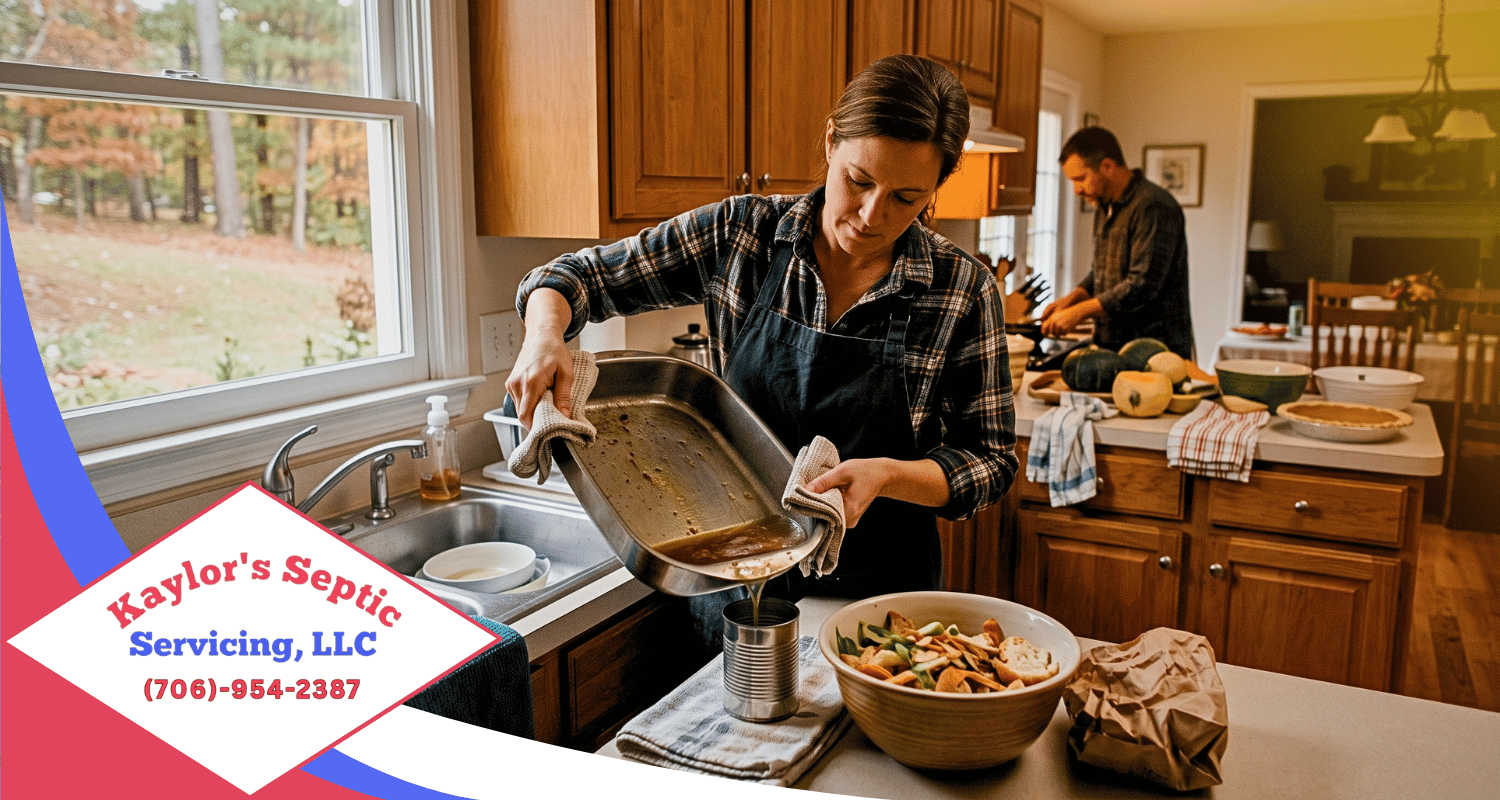
If there is one rule worth putting at the top of your Thanksgiving septic tips, it is this: do not pour turkey grease down the kitchen sink.
That includes drippings from the roasting pan, cooking oil, melted butter, bacon grease, gravy fat, and other oily leftovers. Hot grease may look harmless while it is liquid. It is still grease, and sending hot water after it does not make it septic-safe.
EPA guidance specifically says not to pour grease, fats, butter, oils, or similar material down the drain. Grease and lighter solids become part of the scum layer in the septic tank, while fats and food solids can also create problems in household piping and add to the material that eventually has to be pumped.
The better approach is simple. Let grease cool enough to handle safely, pour or scrape it into a container that can be sealed, and place it in the trash according to local waste rules. Wipe greasy pans with a paper towel before washing them so less fat reaches the sink.
For Thanksgiving septic tips that people can actually follow while cooking, put the grease container near the prep area before the meal starts. Anyone helping in the kitchen has an obvious place for drippings instead of reaching for the drain.
A turkey pan can produce a surprising amount of liquid fat. Treating it like trash from the beginning is easier than trying to undo what went down the sink later.
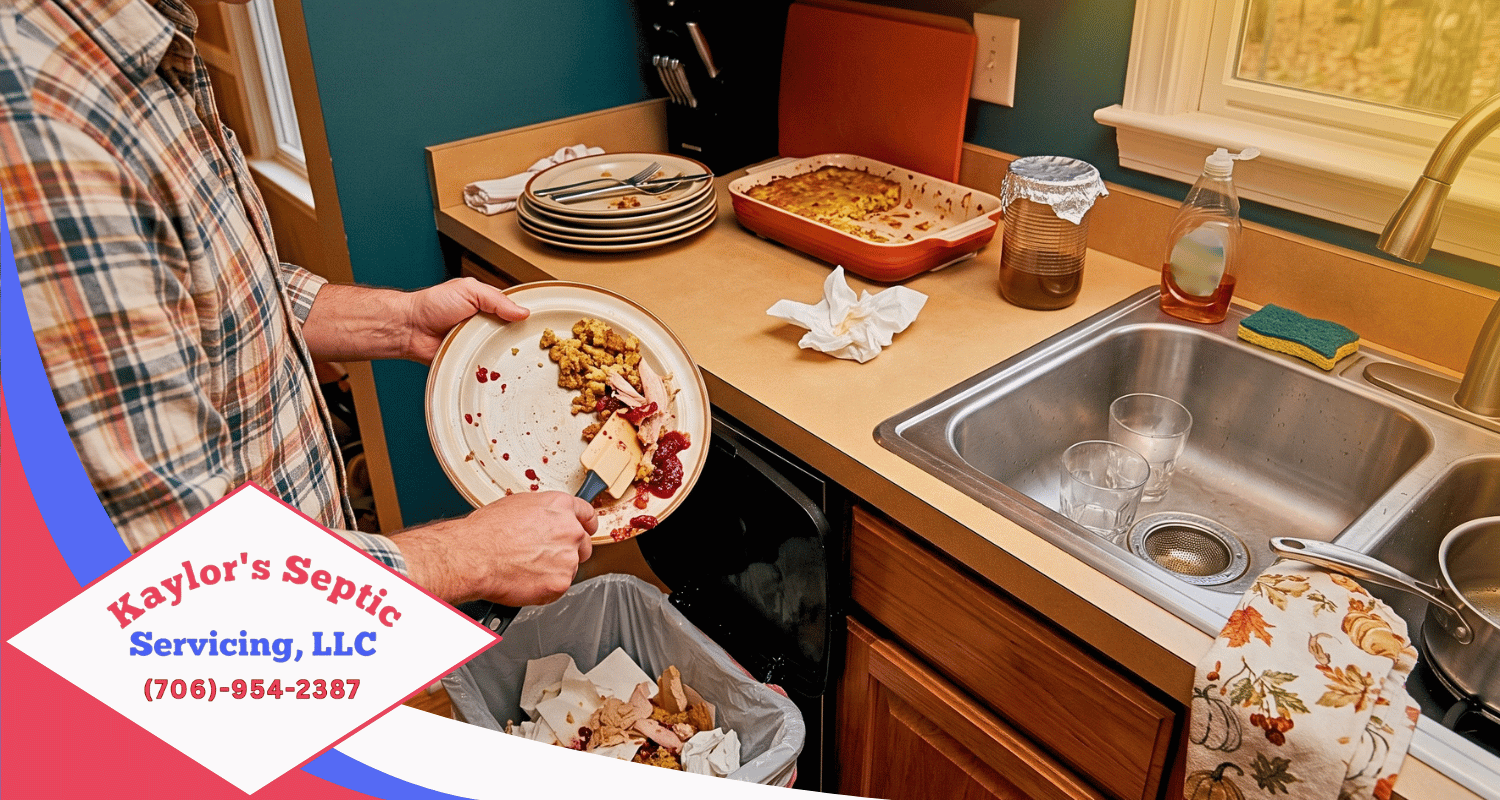
2. Scrape Food Into the Trash Before Washing Plates
Thanksgiving cleanup creates more than grease. Potato peels, bones, vegetable trimmings, coffee grounds, sauces, rice, stuffing, bread, and plate scraps can all end up near the sink at once.
None of them needs to go into the septic system. That is why Thanksgiving septic tips should treat food scraps as trash or compost where accepted, not as sink waste.
UGA notes that eggshells, bones, and vegetables do not digest well in a septic tank and add to the sludge layer. EPA also tells homeowners to keep coffee grounds and food waste out of the system as much as possible.
That makes plate scraping one of the easiest Thanksgiving septic tips to use. Put a trash bowl, compost container where appropriate, or lined garbage bin next to the cleanup area. Scrape plates before rinsing. Use a sink strainer to catch the smaller pieces that would otherwise go down the drain.
Do the same with leftovers that are no longer worth saving. The sink is not a disposal route for gravy, casserole, mashed potatoes, soup solids, or food that has gone bad.
This also keeps cleanup moving. People can scrape, stack, and wash without stopping to fish food out of the drain every few minutes.
3. Do Not Treat the Garbage Disposal Like a Thanksgiving Trash Can
A garbage disposal changes the size of food waste. It does not make the food disappear. Good Thanksgiving septic tips make that distinction before cleanup starts.
That distinction matters for Thanksgiving septic tips because holiday cooking creates exactly the kind of high-volume food waste that is easy to feed into a disposal without thinking about what happens next.
EPA says garbage-disposal use can affect how often a septic tank needs pumping because ground food can accumulate as scum and sludge. UGA likewise notes that garbage disposals increase the need for routine pumping and that bones, eggshells, and vegetables add more solids to the tank.
If your kitchen has a disposal, limit its use during Thanksgiving cleanup. Scrape food into the trash first. Use the disposal for small residual pieces rather than entire plates of leftovers or prep waste.
Avoid putting bones, poultry skin, fibrous vegetable scraps, coffee grounds, eggshells, large amounts of starches, or greasy leftovers into the disposal. Even when the blades can grind something, the septic tank still receives what is flushed away.
A lot of Thanksgiving septic tips are really about stopping unnecessary material before it enters the plumbing. The garbage disposal is one of the easiest places to do that.
4. Spread Out Dishwashing, Laundry, Showers, and Other Heavy Water Use
Food waste is only half of the Thanksgiving problem. The other half is water, which is why Thanksgiving septic tips have to cover timing as well as disposal.
UGA published a Thanksgiving-specific post explaining that homes with onsite wastewater systems see extra water use when visitors arrive. Its holiday wastewater guidance is a useful reminder that extra guests change how much water moves through the home even when nobody is doing anything unusual.
The practical Thanksgiving septic tips are not about telling everyone to stop using the bathroom. They are about avoiding a pileup of water-heavy jobs when you can.
Do laundry before the busiest cooking and hosting window instead of running bedding, towels, and clothing while the dishwasher is also cycling repeatedly. Run full dishwasher loads rather than several half-loads. If overnight guests are taking showers, avoid stacking those showers on top of laundry and repeated kitchen cleanup when there is flexibility.
EPA recommends spreading laundry use throughout the week because doing all household laundry in one day can send too much water through the system too quickly. That same principle fits Thanksgiving: a large amount of water entering over a short period gives the system less time to handle each load.
A properly functioning system should handle normal household use. These Thanksgiving septic tips are about avoiding unnecessary concentration, not rationing water to cover up a system that is already failing.
If the home can only avoid backups by dramatically cutting normal water use, that is a service problem, not a holiday-management trick.
5. Use Cleaners Carefully and Keep the Wrong Chemicals Out of Household Wastewater
Thanksgiving cleanup can mean stronger cleaners, more disinfecting, more dishwasher cycles, and more products around the kitchen and bathrooms. That is another reason Thanksgiving septic tips need to cover what reaches the septic tank.
EPA says septic systems contain living organisms that help digest and treat household waste. It warns against pouring oil-based paints, solvents, pesticides, drain cleaners, and large volumes of toxic cleaners down the drain.
UGA’s September 2026 Toilet or Trash guidance also tells homeowners to avoid large volumes of cleaners such as bleach because they can adversely affect the bacteria breaking down waste in the septic system.
This does not mean a septic home cannot be cleaned normally. Use household cleaning products as directed. The problem is treating the drain as a disposal point for leftover chemicals, paint, solvent, concentrated cleaner, or anything else that was never meant to become household wastewater.
One of the more useful Thanksgiving septic tips is to separate cleaning from disposal. Cleaning a counter with the right amount of product is one thing. Pouring the rest of a chemical container down the sink because guests are arriving is another.
Avoid chemical drain openers as a holiday shortcut too. If a drain is repeatedly slowing down before guests arrive, find out why instead of trying to hide the symptom with a harsh product.
6. Give Guests an Obvious Place for Wipes, Paper Towels, and Hygiene Products
The guest bathroom is the other place where Thanksgiving habits can change quickly, so Thanksgiving septic tips should not stop at the kitchen sink.
Someone who normally uses municipal sewer may not think about a septic tank at all. Wipes, paper towels, feminine hygiene products, dental floss, cotton items, and other bathroom waste may end up in the toilet simply because there is nowhere obvious to put them.
The easiest fix is not a speech. Put a visible trash can in every bathroom guests are likely to use.
Current UGA guidance says the toilet should be limited to human waste and toilet paper, and lists cooking grease, coffee grounds, large volumes of cleaner, and non-degradable products among the things to keep out. EPA gives similar advice and says only human waste and toilet paper belong in the toilet.
That turns guest behavior into one of the most practical Thanksgiving septic tips in the article. A small wastebasket does more work than a long explanation.
Keep extra toilet paper where guests can find it. If wipes are available in the bathroom, make the trash can easier to reach than the toilet. Paper towels from kitchen cleanup belong in the trash too, even when they look thin enough to flush.
This does not need to become awkward. A house on septic simply has different disposal rules, and the room setup can make those rules easy to follow.
7. Do Not Wait Out Slow Drains, Gurgling, Odors, Backups, or Wet Ground
Thanksgiving can increase water use, but Thanksgiving septic tips should not become an excuse for ignoring a septic system that was already showing warning signs.
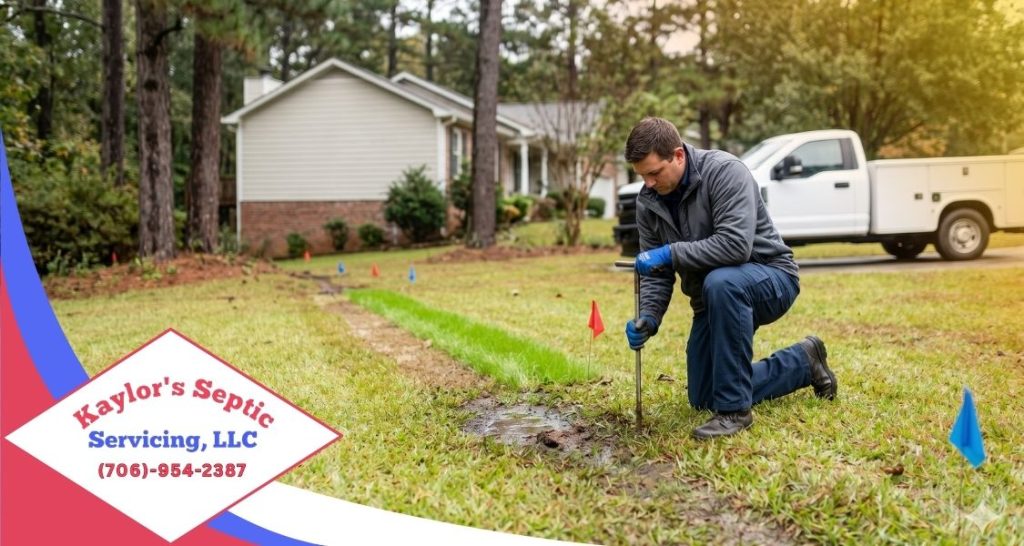
Several slow drains at once, recurring gurgling, sewage odors, wastewater backing up into tubs or showers, persistent wet ground near the septic area, or unusually green and spongy grass over the drain field deserve attention.
Kaylor’s article on septic drain field signs after heavy rain explains how slow drains, odors, wet ground, and recurring problems can point beyond a simple indoor clog. Those symptoms are especially worth checking before a day that will put more water through the home.
Good Thanksgiving septic tips should not turn every warning sign into “pump the tank.” Pumping may be the right service if the tank is due or solids are the problem. A damaged line, blockage, or drain-field issue needs a different answer.
If the problem points to the pipe between the house and tank, Kaylor’s service line repair page is a better fit than another pump-out.
When the maintenance history is unclear, Kaylor’s inspection and maintenance service gives homeowners a place to start. A tank that is actually due for pumping has a more direct path through Kaylor’s septic tank pumping service. When accumulated sludge and debris are part of the issue, septic cleaning may also be relevant.
If sewage is actively backing up, reduce water use and call for professional help. Continuing to run dishwashers, laundry, showers, and toilets sends more wastewater toward a system that is already struggling.
What to Do With Thanksgiving Grease Instead
Grease disposal deserves a little more detail because the wrong advice often sounds convenient. This is one area where Thanksgiving septic tips need to be specific.
Do not pour grease down the sink with hot water. Do not rely on dish soap to make a large amount of fat disappear. Do not pour it into the garbage disposal and run the blades.
Let liquid fat cool until it is safe to handle. Use a heat-safe disposable container or another suitable container you can seal. Scrape semi-solid fats into the trash. Wipe oily cookware before washing it. A sink strainer can catch smaller food pieces during cleanup.
These Thanksgiving septic tips also help the household plumbing before the wastewater ever reaches the tank. Less fat and food in the drain means less material moving through the pipes in the first place.
If your local waste program has a specific grease or cooking-oil collection option, follow that program. Otherwise, contain it and dispose of it with household trash according to local rules.
The main point stays simple: Thanksgiving grease belongs somewhere other than the septic drain.
Thanksgiving Does Not Automatically Mean Your Septic Tank Needs Pumping
A full house and a large meal are not automatic proof that the septic tank needs pumping. Responsible Thanksgiving septic tips should say that clearly.
This is where some seasonal Thanksgiving septic tips go too far. They turn “guests are coming” into “pump before the holiday” without looking at the actual service history.
Pumping makes sense when the tank is due based on its condition, household use, tank size, solids, prior service history, or a professional inspection. It also makes sense when a qualified septic professional finds that accumulated material needs to be removed.
If the tank was serviced recently and the system is working normally, Thanksgiving itself is not a reason to pump it again.
On the other hand, if nobody knows the last pumping date, several fixtures are slowing down, odors are returning, or the yard is showing persistent wet spots, the holiday is a bad time to keep guessing. An evaluation before the busiest day is more useful than assuming the system will be fine because it made it through last year.
That is the service path behind these Thanksgiving septic tips: maintenance based on evidence, not the date.
A Simple Thanksgiving Septic Tips Checklist Before the Kitchen Gets Busy
A short check before guests arrive can prevent a lot of bad disposal decisions later.
- Set out a container for turkey grease, cooking oil, and other fats.
- Put a trash or compost container, where appropriate, beside the food-prep and cleanup area.
- Use a sink strainer and scrape dishes before rinsing.
- Keep large amounts of food waste out of the garbage disposal.
- Run full dishwasher loads and avoid stacking laundry, showers, and repeated dishwashing when possible.
- Put visible wastebaskets in guest bathrooms.
- Keep wipes, paper towels, hygiene products, grease, coffee grounds, and chemicals out of drains and toilets.
- Pay attention to slow drains, gurgling, odors, backups, and wet areas instead of assuming the holiday caused them.
- Check the septic service history if you are not sure when the tank was last pumped.
The point of Thanksgiving septic tips is not to make the meal harder. It is to keep avoidable waste and unnecessary water load out of the system while everyone else is focused on cooking and hosting.
Thanksgiving Septic Tips FAQ
Can Turkey Grease Go Down a Septic Drain if I Use Hot Water?
No. EPA guidance says cooking grease and oil should not be poured down the drain. Hot water may keep grease liquid for part of its trip through the plumbing, but it does not make the grease appropriate for the septic system. Collect the grease, let it cool safely, and dispose of it outside the drain.
Is a Garbage Disposal Bad for a Septic System?
A garbage disposal is not automatically a septic failure, but it adds food solids to the tank. EPA says garbage-disposal use can increase how often a tank needs pumping. During Thanksgiving cleanup, scrape plates and food-prep waste into the trash first and keep disposal use limited.
Can I Run the Dishwasher Several Times on Thanksgiving?
You can use the dishwasher, but repeated dishwashing adds to the same water load as showers, toilets, sinks, and laundry. One of the more useful Thanksgiving septic tips is to run full loads and avoid stacking every water-heavy household job into the same part of the day when possible.
What Should Thanksgiving Guests Avoid Flushing?
Only human waste and toilet paper should go into the toilet. Wipes, paper towels, feminine hygiene products, dental floss, diapers, and other trash belong in a wastebasket.
Does Thanksgiving Mean I Should Pump My Septic Tank First?
No. The holiday does not create a pumping deadline. If the tank is due, the service history is unknown, or warning signs are already present, a professional evaluation may show that pumping is appropriate. A recently serviced system that is working normally does not need another pump-out just because guests are coming.
What Septic Warning Signs Should I Take Seriously Before Thanksgiving?
Multiple slow drains, recurring gurgling, sewage odors, backups, standing water, soggy soil, or unusual green growth around the septic area are reasons to investigate. Those signs can come from different parts of the system, so diagnosis matters more than assuming the tank simply needs pumping.
Keep Thanksgiving Waste Out of the Drain — and Deal With Warning Signs Early
Most of the best Thanksgiving septic tips happen before anything goes wrong. Keep grease and food waste out of the sink, limit what reaches the garbage disposal, spread out heavy water use, give guests a place for non-flushable items, and use cleaning products the way they were intended.
Those habits are easy when the septic system is healthy. They are not a substitute for service when the system is already warning you.
Kaylor Septic serves residential and commercial properties across Bartow, Cherokee, Cobb, Floyd, Gordon, Paulding, and Pickens Counties. If slow drains, gurgling, odors, backups, wet ground, or an unknown maintenance history are already part of the picture, use the holiday as the reason to stop guessing, not as the reason to automatically pump.
For professional inspection, pumping, or cleaning before a busy household week, contact Kaylor Septic or call 706-954-2387.
See a Warning Sign Before Thanksgiving?
Slow drains, gurgling, odors, backups, wet ground, or an unknown pumping history are better reasons to call than the holiday itself.