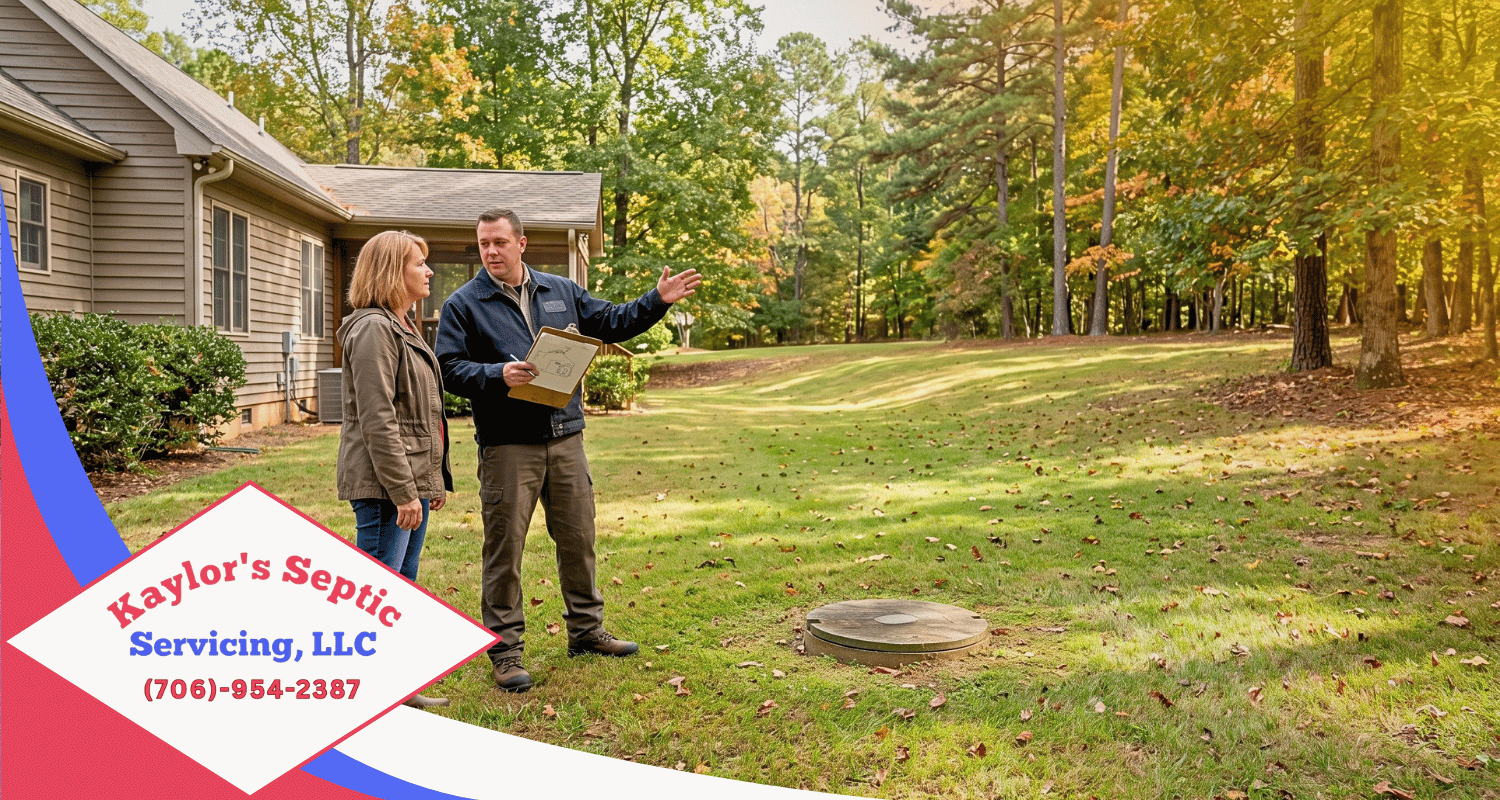
October is a useful time for winter septic maintenance in North Georgia because summer is behind you, wetter months are ahead, and small septic problems still have time to show themselves before colder weather makes the situation more inconvenient. The point is not to pump a tank simply because the calendar says October. The point is to look at the system you actually have and deal with anything that already looks questionable.
A septic system can seem normal right up until several things start happening together: drains slow down, toilets gurgle, the same patch of ground stays wet, odors return after rain, or nobody in the house can remember the last pump-out. Those are better reasons to act than a seasonal date on its own.
For homeowners across Bartow, Cherokee, Cobb, Floyd, Gordon, Paulding, and Pickens Counties, winter septic maintenance should be a practical condition check. Review the service history, inspect the yard, look at household water use, confirm where the tank and drain field are, and get professional help when the evidence points beyond normal maintenance.
Why October Is a Useful Winter Septic Maintenance Checkpoint
The strongest reason to think about winter septic maintenance in October is timing. You can still walk the property, find service records, locate access points, correct drainage problems around the septic area, and schedule an inspection before the year gets busier.
The U.S. EPA says the average household septic system should be inspected at least every three years, while household septic tanks are typically pumped every three to five years. Those are general guidelines, not a universal deadline. Household size, wastewater volume, the amount of solids entering the tank, and tank size all affect the right service interval. The EPA’s septic system care guidance is useful because it treats pumping as a condition-and-use decision rather than a calendar ritual.
That matters for winter septic maintenance. A tank that was pumped recently and is working normally may not need anything beyond a check. A tank with no records, repeated slow drains, or several years of unknown use deserves a different conversation.
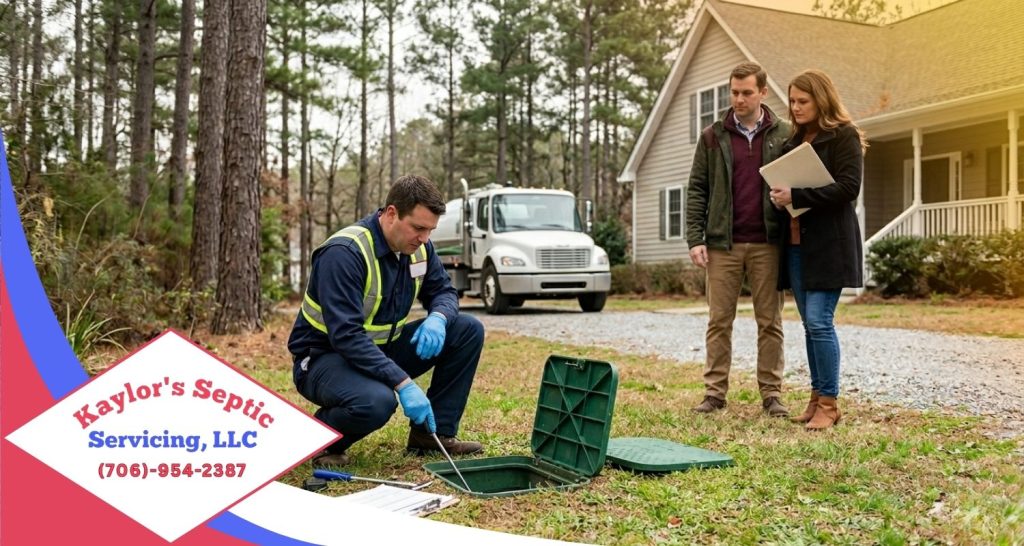
Kaylor Septic’s inspection and maintenance service is a better starting point when you do not yet know what the system needs. Inspection gives the service decision some evidence behind it instead of turning October into an automatic pump-out month.
1. Start Winter Septic Maintenance With the Service History
Good winter septic maintenance starts with what has already happened to the system. Find the last pumping date if you can. Look for inspection reports, repair invoices, a property sketch, prior service notes, or records left by a previous owner.
If the paperwork is missing, that is useful information too. It means you should stop assuming the tank is current just because the plumbing still works today.
UGA Cooperative Extension advises homeowners to know where their onsite wastewater system is and how it works. Its beginner’s guide to septic systems also notes that local health departments may have records or maps that help identify the system layout.
For winter septic maintenance, write down five basics before you do anything else: the last known pump-out, the last inspection, the tank location, the drain-field location, and any repair history you know about. That small record gives future service visits context and makes it easier to notice when the system’s behavior changes.
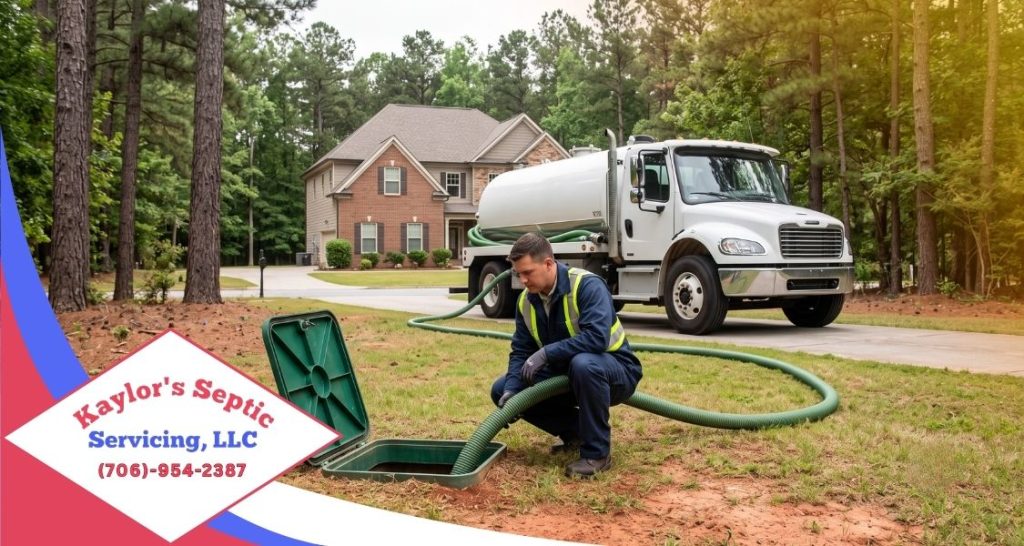
If the records show that the tank may be due, Kaylor’s septic tank pumping service is the natural next step. If the history is unclear, an inspection first makes more sense than guessing.
Winter Septic Maintenance Records to Keep Before Colder Weather
You do not need a complicated maintenance log. A single note with dates, service work, tank size if known, and any recurring symptoms is enough to make winter septic maintenance more useful next year.
Also record changes around the property. A new household member, a home addition, a new washing machine, landscaping near the drain field, repeated vehicle traffic over part of the yard, or drainage work can all change the context around the system.
2. Locate the Tank, Drain Field, and Access Points Before You Need Them
A surprising number of homeowners know they have septic but cannot point to the tank lid or the boundaries of the drain field. That makes winter septic maintenance harder than it needs to be.
Knowing the layout matters because you need to keep heavy vehicles and equipment off the drain field, keep deep-rooted landscaping away from sensitive areas, and make sure service crews can reach the tank when pumping or inspection is actually needed.
Do not dig randomly or open a septic tank yourself. Septic tanks can contain dangerous gases, and a buried lid can also create a serious physical hazard if it is damaged or poorly secured.
If the tank is difficult to access every time service is needed, Kaylor’s riser installation service may be worth discussing. A riser does not improve treatment by itself. Its value is simpler access for future pumping, inspection, and maintenance.
For winter septic maintenance, easy access matters because a buried or forgotten lid can turn a routine visit into extra digging and delay. October is a good time to identify the access point before the yard gets wetter and service becomes more inconvenient.
Use Records Before You Start Guessing in the Yard
Georgia DPH maintains onsite sewage homeowner resources and directs locally related record, inspection, and service questions to county Environmental Health offices. If you do not know where the system sits, records are a better first move than probing the yard on your own.
Once you know the layout, mark it on a property sketch and keep that with your service records. That small step makes later winter septic maintenance and emergency service much easier.
3. Use Winter Septic Maintenance to Check the Drain Field and Runoff
The drain field is where a large part of the real work happens after wastewater leaves the tank. That is why winter septic maintenance cannot stop at the tank lid.
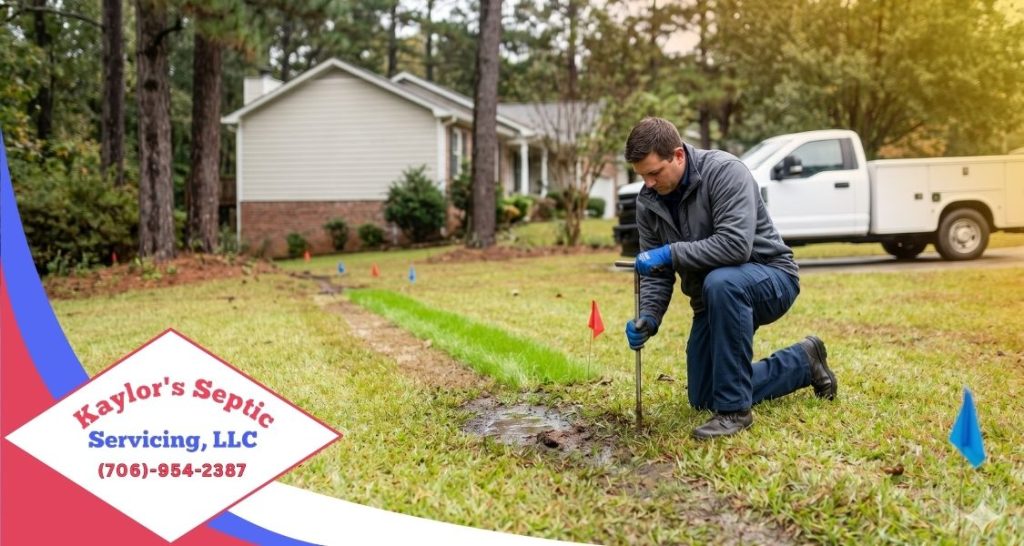
Walk the drain-field area and compare it with the rest of the yard. Look for standing water, soil that stays soft after surrounding ground has dried, sewage odors, unusually green or spongy grass, erosion, or runoff that keeps moving toward the septic area.
UGA’s September 2026 guidance on not overloading a septic system with water tells homeowners to check for leaks, space out laundry, and monitor increased rain. The reason is straightforward: the drain field still has to accept and disperse household wastewater even when the soil is already wet.
Kaylor’s own article on septic drain field signs after heavy rain goes deeper into recurring wet ground, odors, slow drains, and other signs that show up after storms. If the same pattern keeps returning, winter septic maintenance should include a professional inspection rather than another month of waiting for the yard to dry.
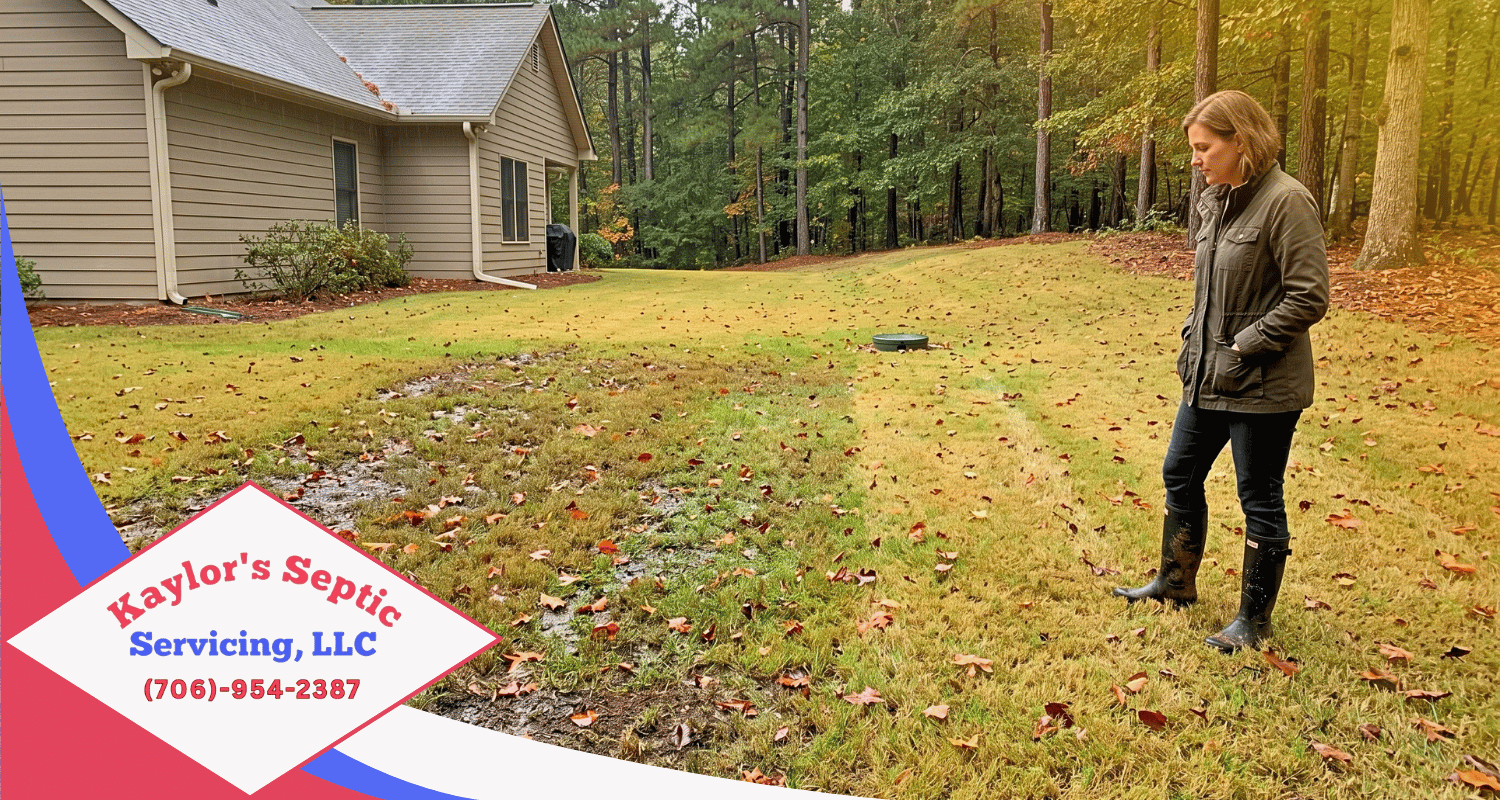
Keep roof drains, sump discharge, and other surface runoff away from the drain field where possible. EPA guidance also recommends keeping vehicles off the field and planting trees an appropriate distance away so roots do not interfere with the system.
Watch Winter Septic Maintenance Conditions After Rain
A wet yard immediately after a storm does not automatically mean septic failure. What matters is the pattern. If one area stays wet longer than everything around it, smells like sewage, or becomes unusually lush, that deserves a closer look.
That distinction keeps winter septic maintenance practical. The job is not to panic at every puddle. It is to notice when the septic area behaves differently from the rest of the property.
4. Fix Leaks and Spread Out Heavy Water Use
Every gallon that goes down a household drain eventually reaches the septic system. A running toilet may feel like a small plumbing nuisance, but it can create steady extra load on the tank and drain field.
EPA guidance says a single leaky or running toilet can add as much as 200 gallons of water per day. That makes leak repair one of the simplest winter septic maintenance jobs a homeowner can handle before paying for septic service.
Check toilets, faucets, appliances, and any fixture that seems to run when nobody is using it. Then look at how the household uses water. Several laundry loads, long showers, and dishwasher cycles stacked into the same part of the day can send a large volume of wastewater into the system quickly.
UGA’s current advice is to space out laundry and watch increased rain. EPA says the same basic thing: doing all household laundry in one day can keep the septic tank from having enough time to treat waste and may flood the drain field.
For winter septic maintenance, this does not mean rationing normal household water. It means removing wasteful or concentrated use that makes a marginal system work harder than necessary.
Winter Septic Maintenance Water Habits Are Not a Repair
If the plumbing only behaves normally when the household drastically cuts water use, something else may be going on. A blocked line, full tank, damaged component, or stressed drain field does not become healthy because everyone takes shorter showers for a week.
Use water habits to reduce unnecessary strain, not to hide recurring symptoms. That is an important line in winter septic maintenance because conservation and diagnosis are not the same thing.
5. Check Lids, Risers, Vegetation, and Exposed Components
October is also a good time to look at the physical condition of anything you can safely see without opening the tank.
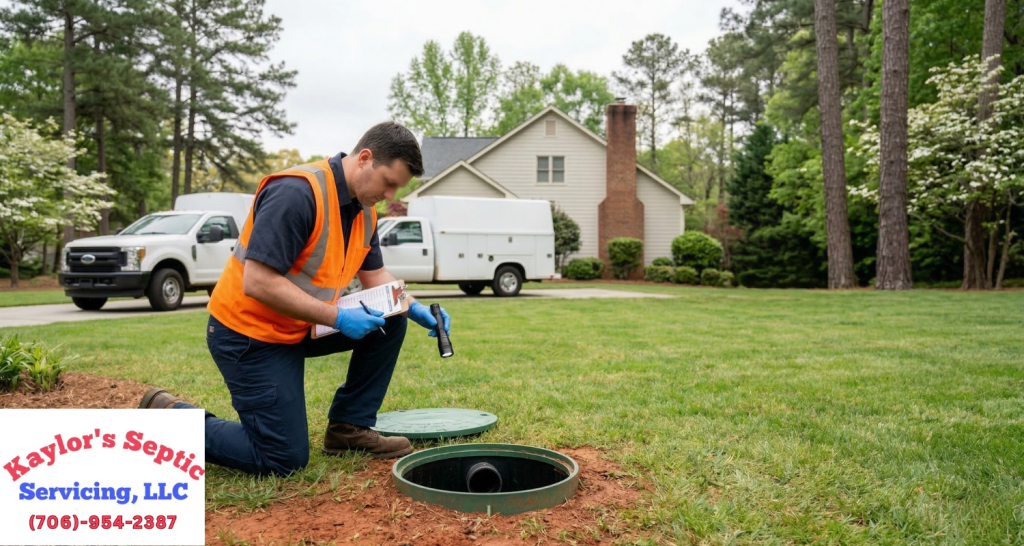
Check that visible lids and risers are secure and not obviously cracked. Keep the access area clear. Do not stack firewood, build a shed, park equipment, or add heavy landscaping directly over the tank or drain field.
UGA’s Shield Your Field guidance recommends keeping heavy traffic, deep-rooted plants, and extra rainwater away from the distribution area. Those are useful winter septic maintenance habits because soil compaction and root intrusion can create problems that have nothing to do with tank pumping.
Vegetation matters too. Grass is generally a good cover over the drain field because it helps stabilize the soil without putting deep roots into the lines. Trees and large shrubs belong farther away.
If you notice repeated wet spots, visible damage, or symptoms that seem tied to the pipe between the house and tank, Kaylor’s service line repair page is more relevant than simply scheduling another cleaning.
North Georgia Cold Does Not Mean Every System Needs the Same Winterization
Most septic components are underground, which gives them some natural protection from brief cold weather. North Georgia still gets freezing nights and colder stretches, but winter septic maintenance should match the actual property instead of copying a northern-state checklist word for word.
Pay more attention to exposed piping, shallow components, damaged lids, poor access, erosion, and any section of the system that is not protected by normal soil cover. Mountain and higher-elevation properties may have different exposure than a lower-elevation suburban yard.
The point is not to create a freeze scare. It is to look for the parts of the system that are actually vulnerable before temperatures drop.
6. Winter Septic Maintenance Means Avoiding Bad Shortcuts
Some seasonal advice sounds helpful because it is easy. That does not make it good septic advice.
One example is the habit of leaving water dripping for long periods whenever freezing weather is forecast. UGA’s Water Resources Team has specifically warned in its cold-weather septic guidance that continuous dripping can add extra water to a septic system and may overload distribution lines.
That does not mean you should ignore pipe-freeze risk. It means winter septic maintenance has to consider both sides of the problem. Protect exposed plumbing, disconnect outdoor hoses, insulate vulnerable pipes, keep heated air moving around indoor pipes on exterior walls, and follow current local freeze guidance for the house.
What you should not do is send unnecessary water into the septic system for hours or days without thinking about where it ends up.
Another shortcut is septic additives. Georgia DPH’s homeowner guidance says additives are not needed for normal septic operation and do not eliminate the need for periodic pumping. A bottle of bacteria, enzymes, or chemicals is not a substitute for inspection, pumping when needed, or a repair.
For winter septic maintenance, simple usually wins: know the system, control unnecessary water, protect the field, and fix real problems instead of buying a shortcut.
Keep Grease, Wipes, and Chemicals Out All Year
Cold weather does not change what the tank is designed to receive. Human waste, toilet paper, and normal household wastewater belong in the system. Wipes, paper towels, grease, oils, hygiene products, cat litter, solvents, paint, and other inappropriate materials do not.
EPA’s care guidance is clear about these items because everything sent down a drain reaches the septic system. For winter septic maintenance, the easiest maintenance habit may simply be keeping unnecessary solids and chemicals out of the plumbing in the first place.
7. Turn Warning Signs Into Service Decisions
The most important part of winter septic maintenance is knowing when the homeowner checklist should stop and professional diagnosis should begin.
Watch for several slow drains at once, recurring gurgling, sewage odors, wastewater backing up into tubs or showers, standing water near the septic area, or unusually green and spongy grass over the drain field. One isolated slow sink can be a normal plumbing clog. A pattern across the house or yard deserves more attention.
EPA’s septic malfunction guidance lists slow drains, gurgling, backups, damp spots, sewage odors, and unusually green grass among common malfunction signs. Georgia’s homeowner guidance also notes that slow drains and backups can come from different causes, including a blockage on the way to the tank, inlet or outlet issues, a clogged filter where present, pump failure on systems that use one, or absorption-field problems.
That is why winter septic maintenance should not translate every symptom into “pump the tank.” Pumping solves accumulated solids. It does not repair a cracked service line or restore a drain field that is not accepting wastewater properly.
Kaylor’s septic cleaning service may be appropriate when buildup inside the tank is part of the issue. Service line repair makes more sense when the line is the problem. Inspection and maintenance is the better starting point when the symptoms do not clearly point to one cause.
Pumping Is Not the Answer to Every Symptom
A homeowner who sees a backup may assume the tank is full. Sometimes it is. Sometimes the restriction is in the line. Sometimes saturated soil or another drain-field problem is part of the picture.
Good winter septic maintenance is diagnosis first. The service should follow what the system is actually doing, not the easiest assumption.
If sewage is actively backing up into the house, reduce water use and get professional help. Continuing to run showers, laundry, toilets, and dishwashers sends more wastewater toward a system that is already struggling.
When Professional Winter Septic Maintenance Makes Sense
Professional winter septic maintenance makes sense when the homeowner no longer has enough information to make a good decision from the surface.
That includes an unknown pumping history, multiple slow fixtures, recurring sewage odors, standing water or soggy soil around the septic area, backups, a difficult-to-access tank, or symptoms that return after rain or normal household use.
It also makes sense after meaningful changes to the property or household. More full-time residents, a home addition, new landscaping near the drain field, heavy vehicles crossing the yard, or drainage work that redirects runoff can all change how the system performs.
Kaylor Septic currently lists septic tank pumping, inspection and maintenance, septic cleaning, service line repair, and riser installation among its services. The company serves residential and commercial properties across Bartow, Cherokee, Cobb, Floyd, Gordon, Paulding, and Pickens Counties. Homeowners in Cherokee County can also use Kaylor’s Cherokee County septic service page as a local path into those services.
For winter septic maintenance, the reason to call is not that October arrived. It is that the system’s history, condition, access, or behavior gives you a reason to get a clearer answer before colder and wetter months arrive.
A Simple Winter Septic Maintenance Checklist for October
You do not need a twenty-step routine. A useful winter septic maintenance check can fit on one page:
- Find the last pumping and inspection dates.
- Confirm where the tank, drain field, and access points are.
- Walk the drain field and look for persistent wet ground, odors, erosion, or unusual vegetation.
- Fix leaking toilets, faucets, and appliances.
- Spread out laundry and other heavy water use.
- Check visible lids, risers, and exposed components for obvious damage.
- Keep vehicles, heavy equipment, deep-rooted plants, and extra runoff away from the drain field.
- Keep grease, wipes, paper towels, hygiene products, and harsh chemicals out of the system.
- Treat multiple slow drains, recurring gurgling, odors, or backups as reasons for professional evaluation.
This is enough to make winter septic maintenance useful without turning normal October home care into unnecessary septic work.
Winter Septic Maintenance FAQ
Does Every Septic Tank Need Pumping Before Winter?
No. Winter septic maintenance does not mean every homeowner needs an October pump-out. EPA says pumping frequency depends on household size, wastewater volume, solids, and tank size. If the tank was serviced recently and the system is behaving normally, another pump-out may not be needed.
What Is the Best October Septic Check for North Georgia Homeowners?
Start with service history and system behavior. If you know when the tank was pumped, know where the drain field is, and are not seeing slow drains, odors, backups, or wet ground, your winter septic maintenance may be mostly preventive. If the history is missing or symptoms are present, inspection becomes more useful.
Can Fall and Winter Rain Affect a Septic Drain Field?
Yes. Saturated soil can make it harder for the drain field to accept additional wastewater. UGA recommends watching increased rain, spacing laundry, fixing leaks, and reducing unnecessary water load. That is why drainage and water use belong in winter septic maintenance for North Georgia homes.
Should I Use Septic Additives Before Winter?
Generally, no. Georgia DPH does not recommend septic tank additives for normal operation. They do not replace periodic pumping or repair. Winter septic maintenance should focus on actual service needs, water use, waste habits, and drain-field protection.
Is a Gurgling Toilet a Sign That I Need Septic Pumping?
Not by itself. Gurgling can be related to a restriction or another flow problem, and the cause may be in the plumbing line, tank, or farther into the septic system. If gurgling is happening with several slow drains, odors, or backup symptoms, winter septic maintenance should include professional evaluation instead of assuming pumping is the only answer.
Schedule Winter Septic Maintenance Before a Small Problem Gets Harder to Ignore
October gives North Georgia homeowners time to look at the septic system before colder weather and wetter ground add another variable. Use that time to review the service history, check the drain field, fix leaks, confirm access, and pay attention to anything that has changed.
If the tank may be due, the maintenance history is missing, several fixtures are slowing down, odors keep returning, or the yard is showing persistent wet spots, winter septic maintenance should move from a homeowner checklist to a professional service call.
Kaylor Septic can inspect the system, pump the tank when it is actually due, clean accumulated waste, repair service-line problems, and improve tank access with riser installation. For winter septic maintenance across North Georgia, contact Kaylor Septic or call 706-954-2387 to request service before a smaller warning becomes a colder-weather problem.
Get the System Checked Before Winter Adds Another Variable
If the maintenance history is unclear or the system is already showing warning signs, get a professional answer before colder weather makes the problem more disruptive.